Pretty Lavish
Turning intent into order value - at scale.
How Pretty Lavish transformed PDP recommendations from generic placeholders into a precision discovery engine - adding £32 per influenced order without a penny of incremental media spend.
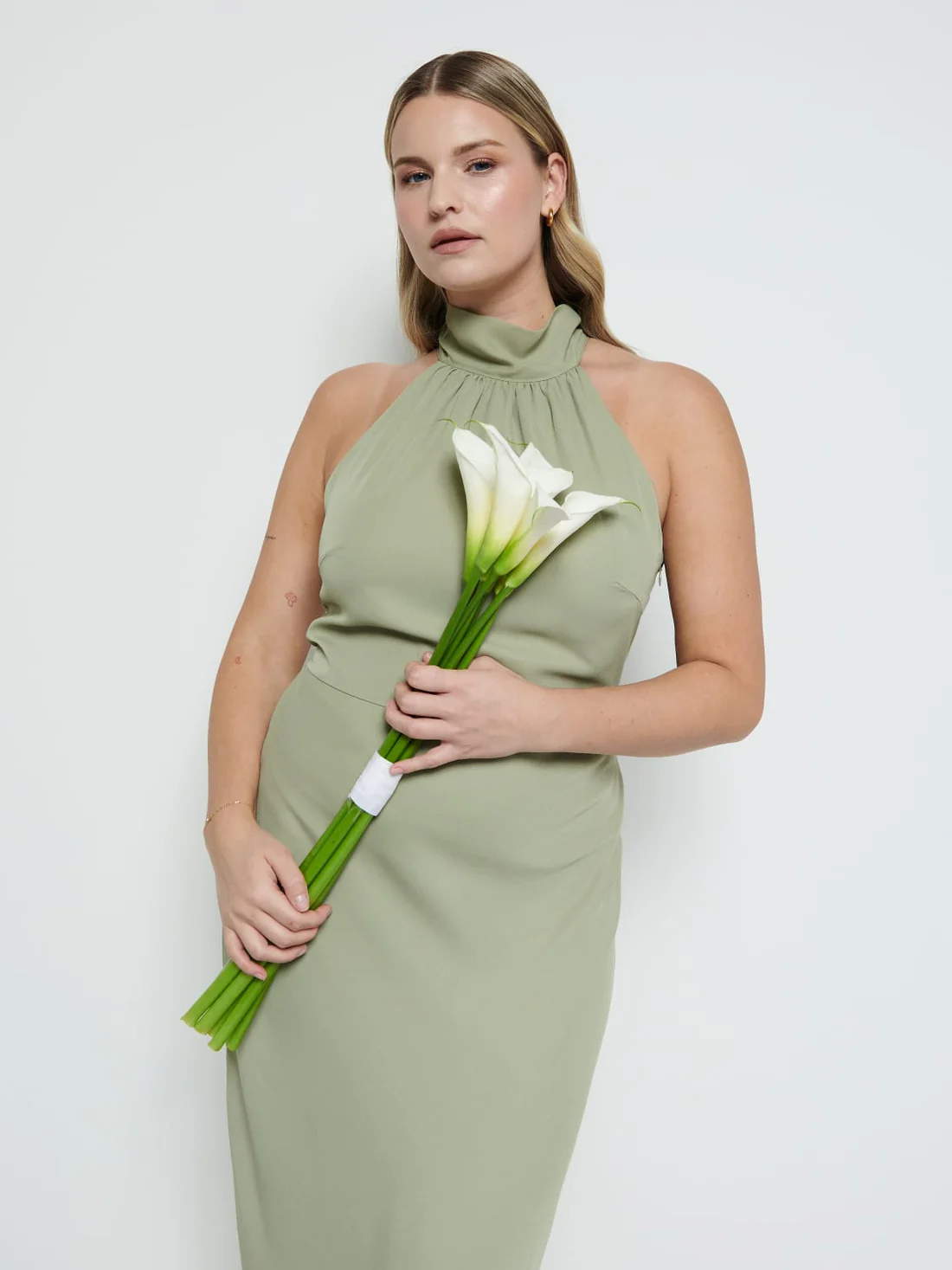
→ See how fabric and silhouette matching surfaces adjacent styles on Pretty Lavish
RecoMelon installs in under a day. First influenced orders in 60min.
No code, no engineering, no catalogue prep.
Message our team on WhatsApp to see how RecoMelon fits your store. Or, run a free PDP audit - see your rec relevance score.
- The Situation
Pretty Lavish didn't have a traffic problem. They had a relevance problem.
As a premium occasionwear brand, Pretty Lavish operates in a category defined by high purchase intent and low tolerance for irrelevance. Shoppers arrive with specific requirements - occasion, silhouette, fabric, sleeve length - and make decisions fast.
Their paid acquisition was performing. Landing pages were optimised. But the moment a high-intent visitor reached a Product Detail Page, the experience broke down - replaced by a generic recommendation block that ignored fabric, silhouette and occasion context entirely.
"Most brands call this 'You Might Also Like.'
In reality, it's: We hope this is close enough.' Hope is not a strategy."
The conversion funnel before RecoMelon
Paid media investment
High-intent traffic acquired at rising CAC - bridesmaid, guest, formal occasion searches.
Landing page optimisation
Messaging refined. Creative improved. First impression controlled.
Product Detail Page - the highest-intent moment
Generic purchase-history recommendations. Visually disconnected. Occasion-blind.
Confidence break point"This isn't what I meant."
Shoppers trained to ignore the module - premium PDP real estate delivering nothing.
Deteriorating acquisition economics
Constrained multi-item purchasing. No compounding return from discovery.
Capital allocation issue
- The Category Dynamics
In occasionwear, nuance isn't preference - it's a dealbreaker.
Pretty Lavish sells into a category where purchase decisions hinge on attributes most recommendation engines treat as interchangeable.
A shopper viewing a satin bridesmaid gown has resolved her occasion, her colour family, her formality tier. What she needs are alternatives that respect that resolution - not products that share a price point or a past purchaser.
- →Fabric handle - satin vs crepe - is not stylistic preference; it photographs and wears differently across venue conditions
- →Sleeve presence is a function of venue dress code, not aesthetic taste
- →Occasion intent (bridesmaid vs. wedding guest) changes the entire purchasing logic
- →When visual continuity breaks, shopper confidence drops - and session depth collapses
"We'd tried three recommendation tools before. None of them understood the category."
- The Intervention
Visual alignment as the recommendation primitive.
RecoMelon re-architected discovery from the SKU level upward. Rather than relying on purchase history or manually maintained rules, every product in Pretty Lavish's catalogue was mapped visually - by what it actually looks like, not what it's labelled as.
How RecoMelon works
- 1
Visual SKU mapping
Every product mapped by fabric, silhouette and drape - automatically. No tagging required from the merchant team.
Fully automated - 2
Shop Similar galleries embedded in PDP
Continuity-first recommendation galleries respect fabric, silhouette and occasion context. Avg. 14 recs per session.
- 3
Dealbreaker™ Filters surface shopper intent
Shoppers eliminate non-negotiables - sleeve, length, fabric, colour - in a single action. 423 filter interactions recorded for Pretty Lavish.
- 4
In-stock filtering by default
Only purchasable products surface - eliminating browse paths that end in out-of-stock frustration.
Live in under 1 day
This created a structural change in how the PDP functions. Instead of a dead end, the PDP became a continuation of the discovery journey - with 1,046,426 recommendations served across the period and 215,109 gallery impressions recorded.
"RecoMelon didn't add recommendations. It re-architected discovery around visual alignment."
- Live in under one day - no engineering dependency, no tagging project, no catalogue prep
- 18,123,572 recommendations generated - a 39.2% increase on the prior period
- 1,271 unique products receiving recommendation exposure - 8.4% more of the catalogue
- Zero changes to existing campaign structure, checkout flow or site architecture
- The Outcome
Results you can take to a board meeting.
These are not engagement metrics dressed up as revenue numbers. Each figure maps directly to order economics and discovery behaviour - the signals that compound into long-term commercial performance.
- AOV Increase+18.1%AOV uplift on rec orders. £126.75 native → £159.18
- Rec Click Growth+111.6%Increase in recommendation clicks
- Rec-Driven Orders+31.6%Growth in orders influenced by recs
- Gallery Impressions+60.2%215,109 vs 143,229 prior period
Executive interpretation
The £32 AOV delta per influenced order was generated without discounting, bundling, or incremental media spend. It came from alignment - from the PDP recommending products that respected the shopper's visual and occasion intent. This is margin architecture, not a UX enhancement.
- Shopper Intelligence
Dealbreaker Filters: what shoppers are actually telling you.
The Dealbreaker™ Filter data is one of the most underused signals in fashion merchandising. Every filter interaction is a shopper articulating a non-negotiable - not a preference, a requirement.
For Pretty Lavish, colour dominated as the primary decision driver, followed by pattern and silhouette. Red, orange and pink led on colour clicks - unsurprising for a brand with a strong occasionwear palette. Solid construction was the dominant pattern preference by a significant margin.
This data has a second-order value beyond the immediate session: it tells your buying and design teams what attributes are driving or blocking purchase intent across the catalogue.
- Strategic Takeaway
Relevance compounds.
Irrelevance erodes.
A 111.6% increase in recommendation clicks is not a UX win. It is evidence that shoppers - who had previously learned to ignore the module - re-engaged once it became visually coherent. That behavioural shift is the foundation everything else builds on.
And discovery, when it's coherent, compounds:
The uncomfortable question for any brand running paid acquisition into a PDP with generic recommendation logic: how much of your acquisition spend is being undermined by misalignment at the highest-intent moment in the funnel?
Explore the features behind product discovery
VisualDNA visual recommendations | Dealbreaker Filters | All RecoMelon features | Compare plans
View more case studies
Shopify brands use RecoMelon to fix bounce, grow AOV, and turn PDPs into high-converting discovery tools. Here’s how.