Visual product discovery alongside Elasticsearch

RecoMelon with Elasticsearch for Shopify product discovery

Elasticsearch can underpin customized search and retrieval systems. RecoMelon offers a Shopify-focused product-discovery layer that applies visual and catalog intelligence across search, collections, PDP alternatives and complementary bundles. Brands can assess where RecoMelon adds value without assuming the existing search infrastructure must be removed.

The Index search interface showing a natural language query and matching products

The discovery problem

Turn retrieval capability into a complete shopping journey.

An Elasticsearch-based storefront reflects the indexes, ranking choices and interfaces the team has built around it. A product can be retrievable without shoppers having an easy way to compare its look, refine a preference or discover a complementary item.

Identify whether the gap sits in data quality, retrieval, presentation or the next product decision. This distinction helps engineering and merchandising teams evaluate a focused addition without attributing every discovery problem to the underlying search infrastructure.

Where RecoMelon fits

Evaluate product intelligence on a bounded surface.

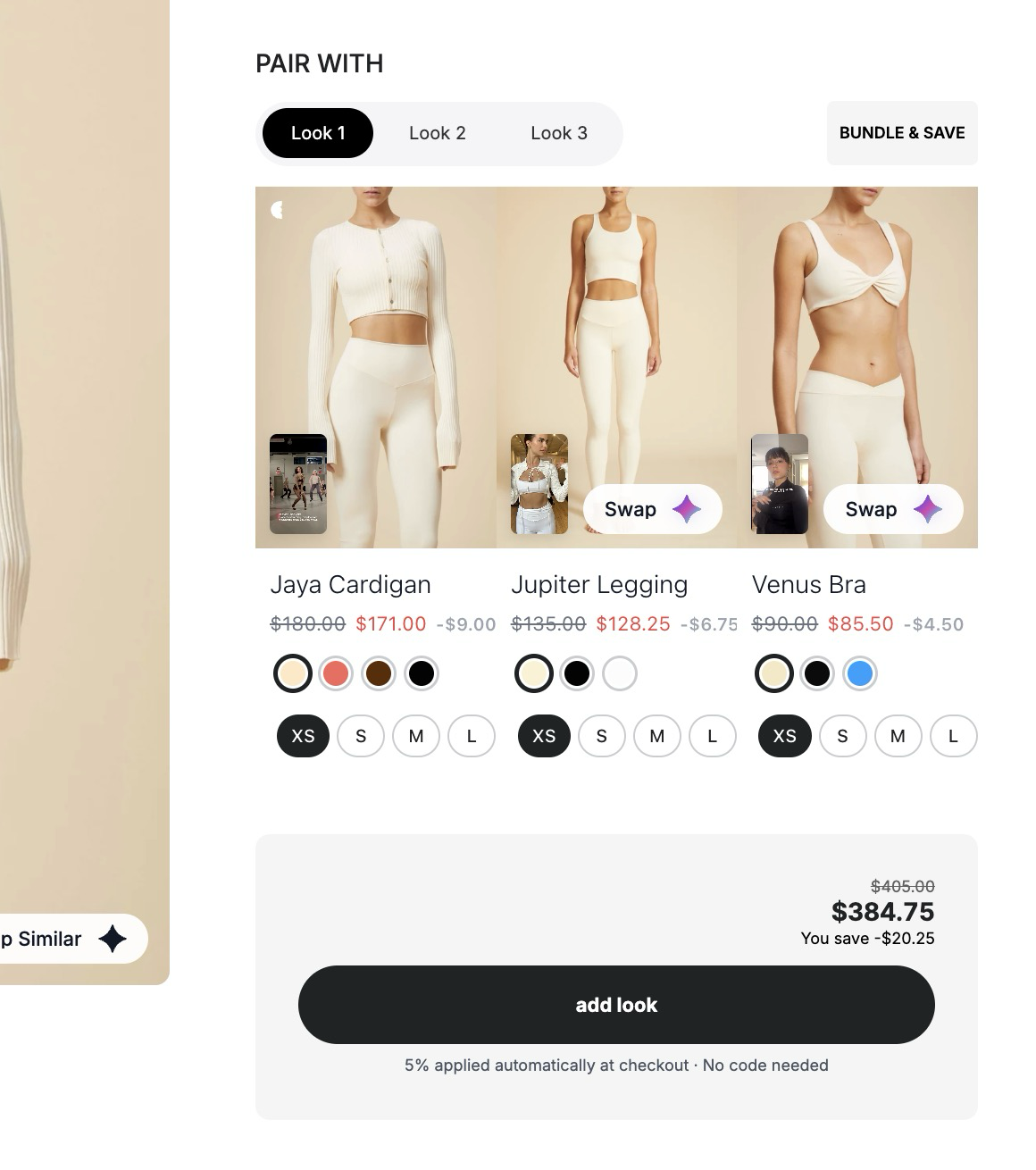
VisualDNA™ provides visual product relationships that can support Shop Similar or Reveal™ on selected Shopify PDPs. Bundles™ addresses a different decision: which products work together around an item already under consideration.

Review the output against the requirements of the chosen category. These are product-discovery use cases to evaluate alongside the existing retrieval stack, not evidence that RecoMelon reproduces every custom Elasticsearch query, index or ranking behavior.

Coexistence and implementation

Keep index and storefront ownership separate.

The team responsible for Elasticsearch should retain ownership of the ingestion and retrieval workflows that remain in use. Define RecoMelon's catalog inputs, chosen presentation surface and event contract as part of a separate implementation review.

No native Elasticsearch connector is assumed. Agree update freshness, variant and market handling, caching, fallback behavior and release responsibilities. In a custom storefront, validate the integration contract before promising a particular delivery model.

Evaluation and evidence

Test relevance and the cost of operating it.

Use representative journeys that expose the current gap, including low-history products and difficult visual distinctions. Assess product exploration, recommendation engagement and conversion on the selected surface, with latency and availability criteria agreed by the storefront team.

Track the effort required to prepare catalog inputs, inspect matches and maintain the experience. Keep any commercial conclusion tied to the tested implementation, audience and attribution method rather than to the choice of search engine alone.

Can RecoMelon work with an Elasticsearch-based storefront?

Yes, subject to an implementation review. An Elasticsearch-based search experience can remain in place while RecoMelon is evaluated on selected visual discovery, recommendation or merchandising surfaces.

What should each system own?

Document catalog ingestion, index and ranking responsibilities, UI ownership, analytics, market handling and fallback behavior before launch.

Is a connector included?

No native Elasticsearch connector is assumed. The integration path should be scoped to the brand’s existing architecture.

Test visual commerce intelligence alongside your search stack

Bring the current architecture, catalog model and weakest discovery journeys. We’ll map a focused RecoMelon evaluation.

Compare on your catalog