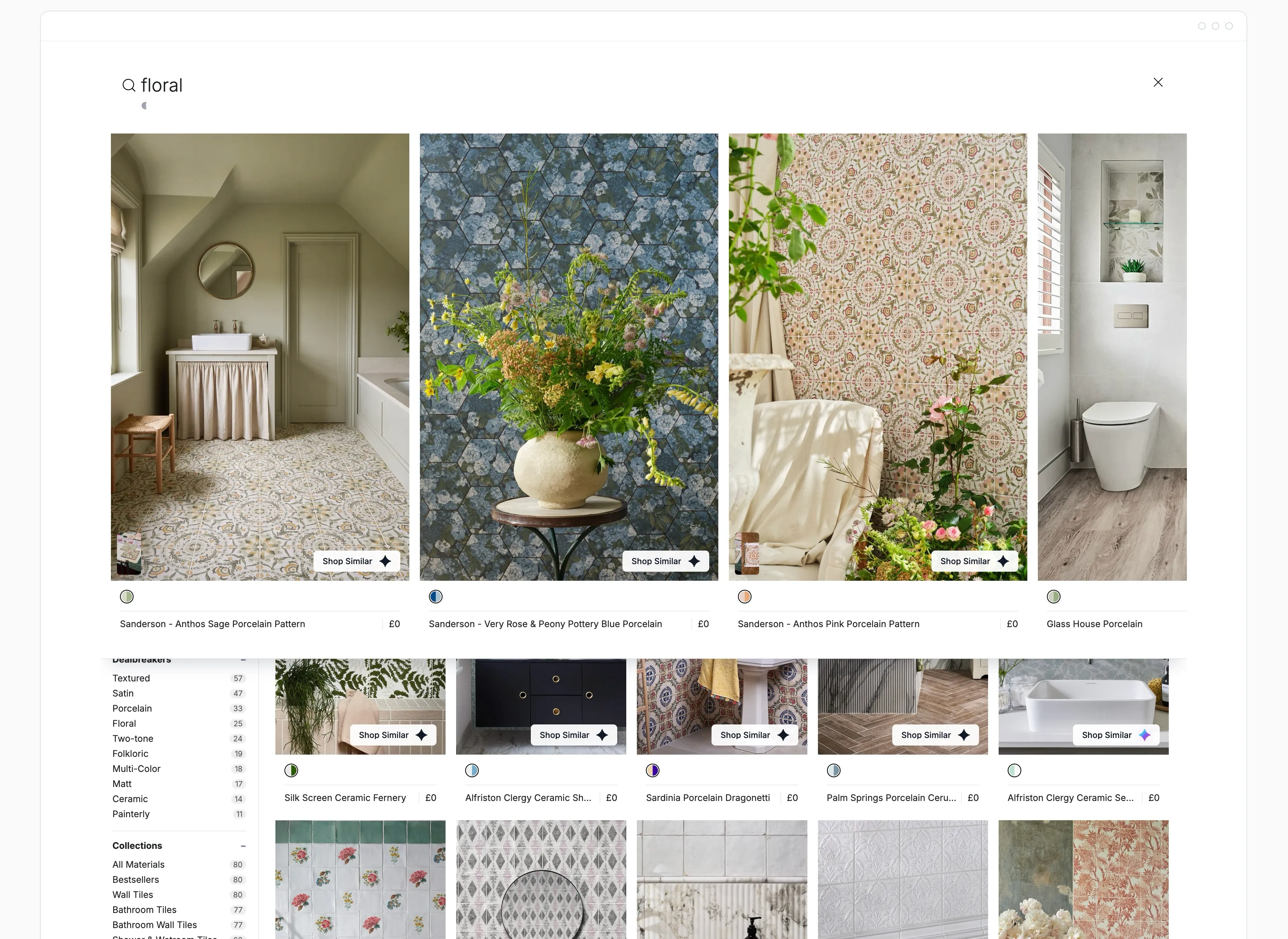
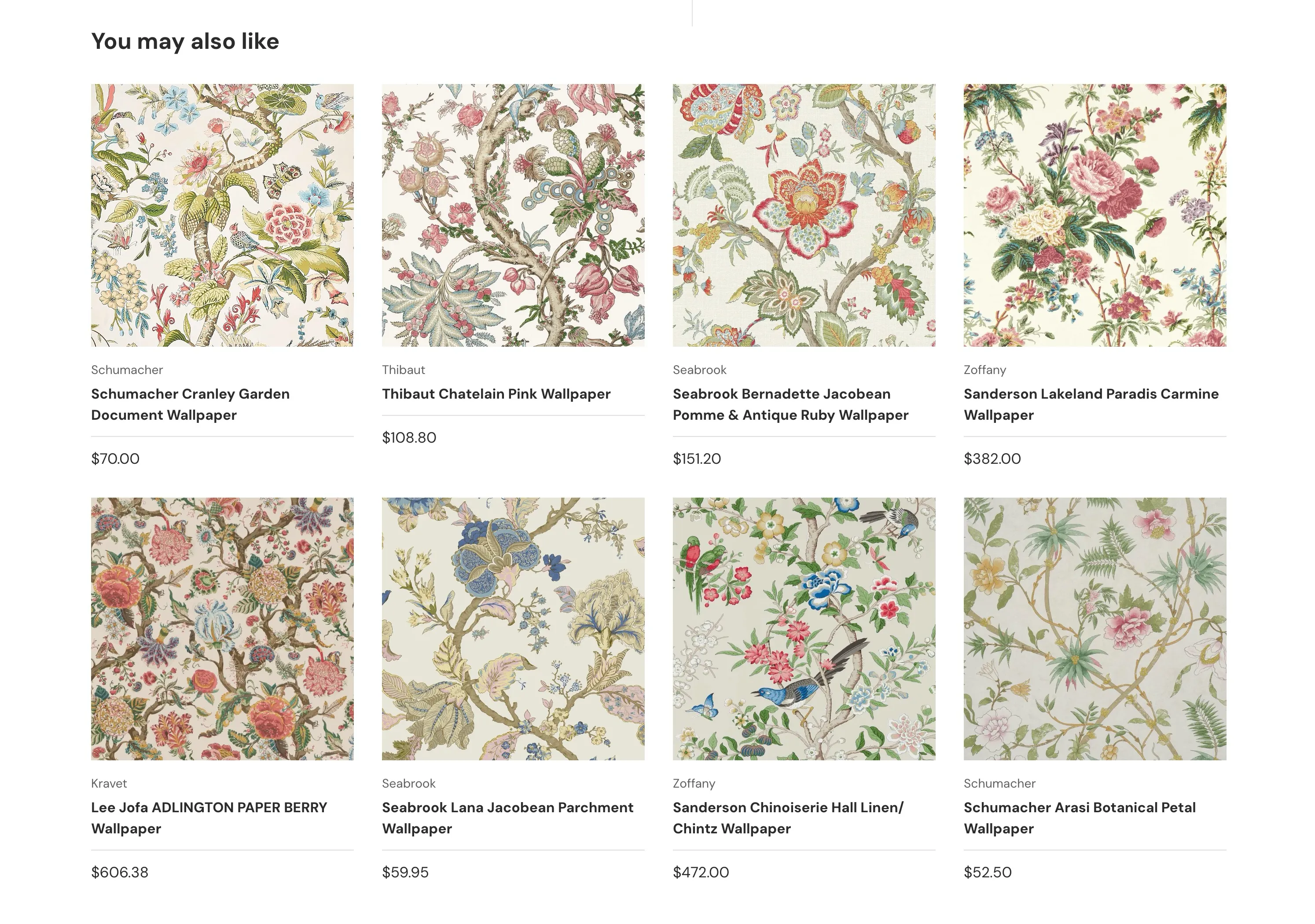
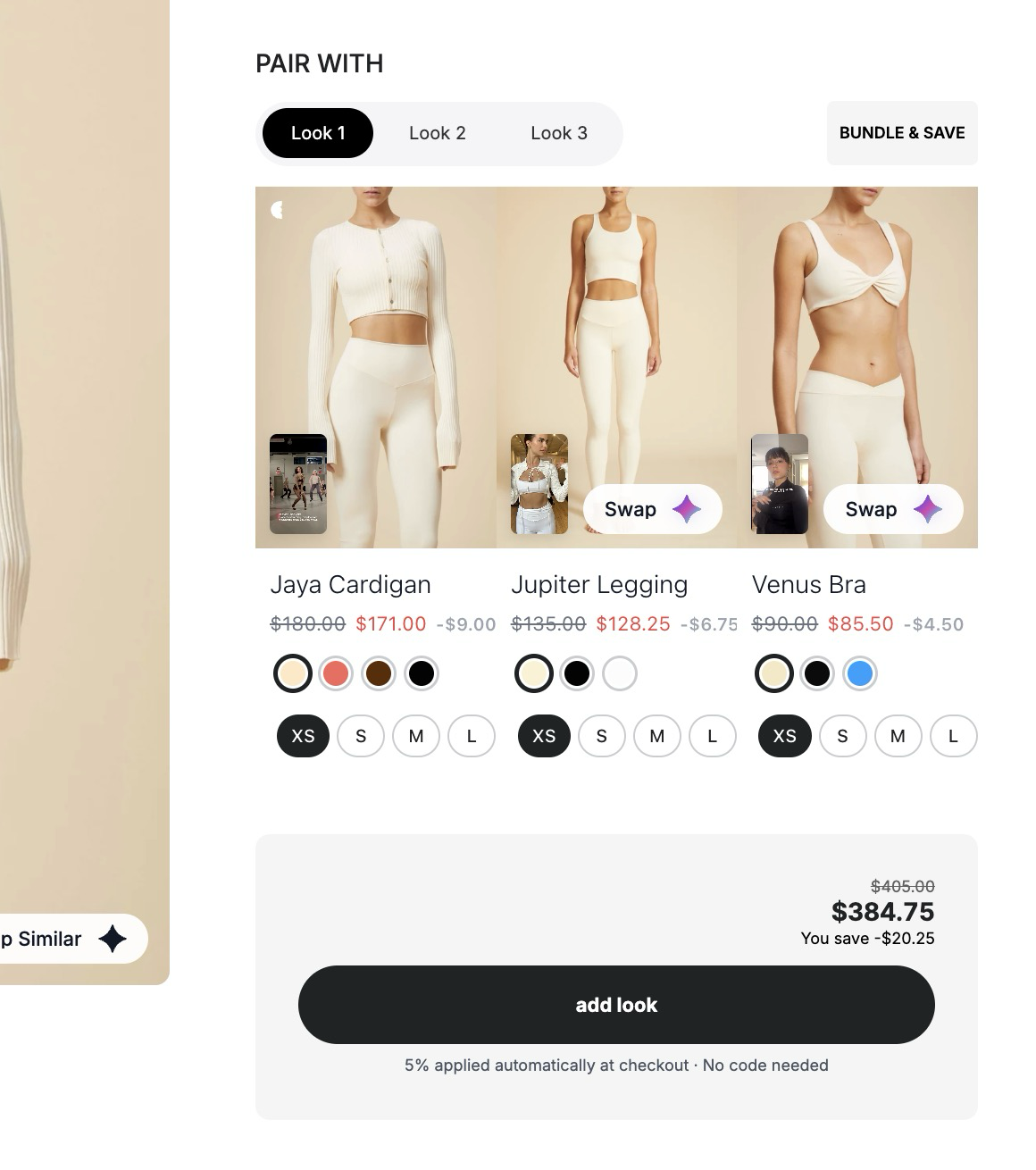
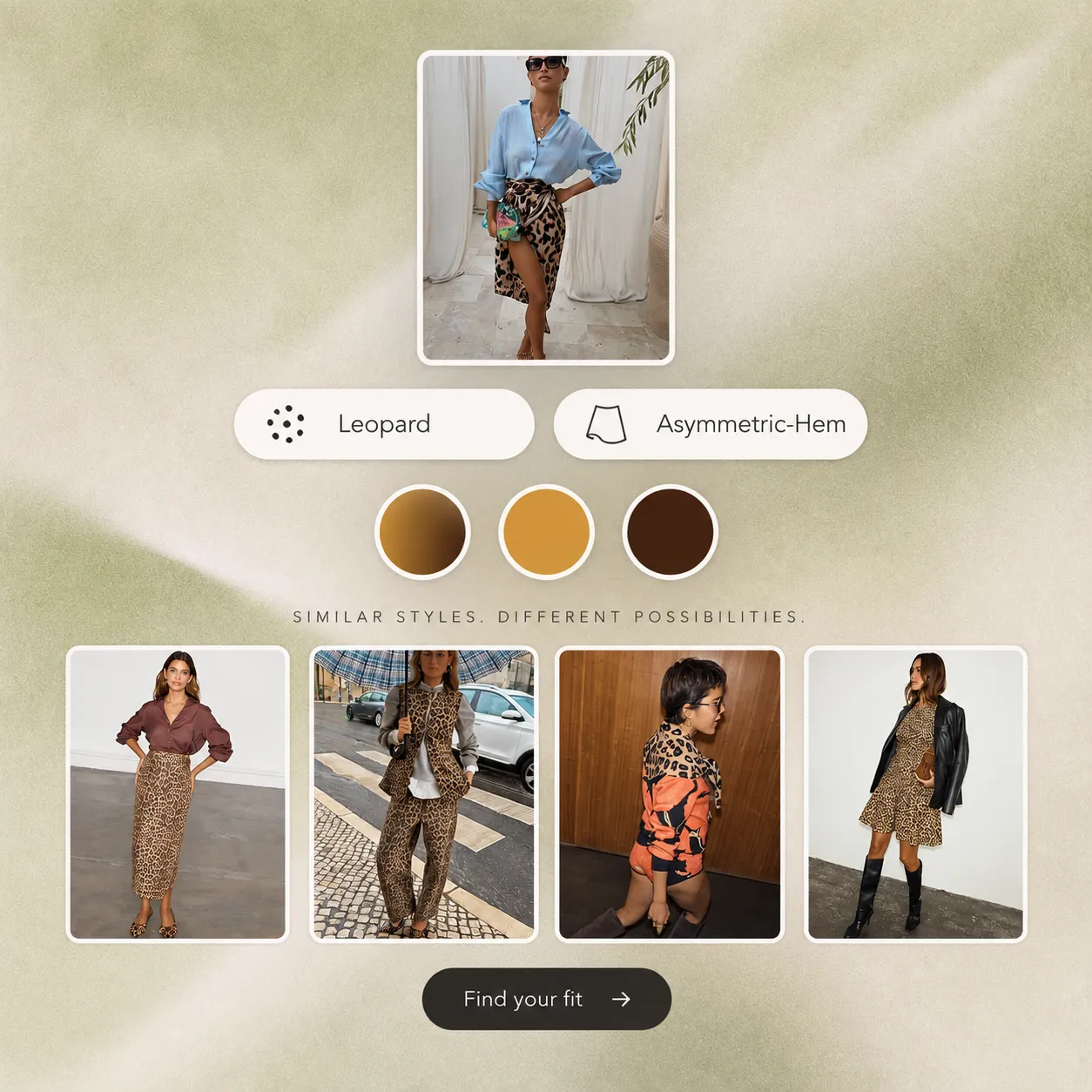
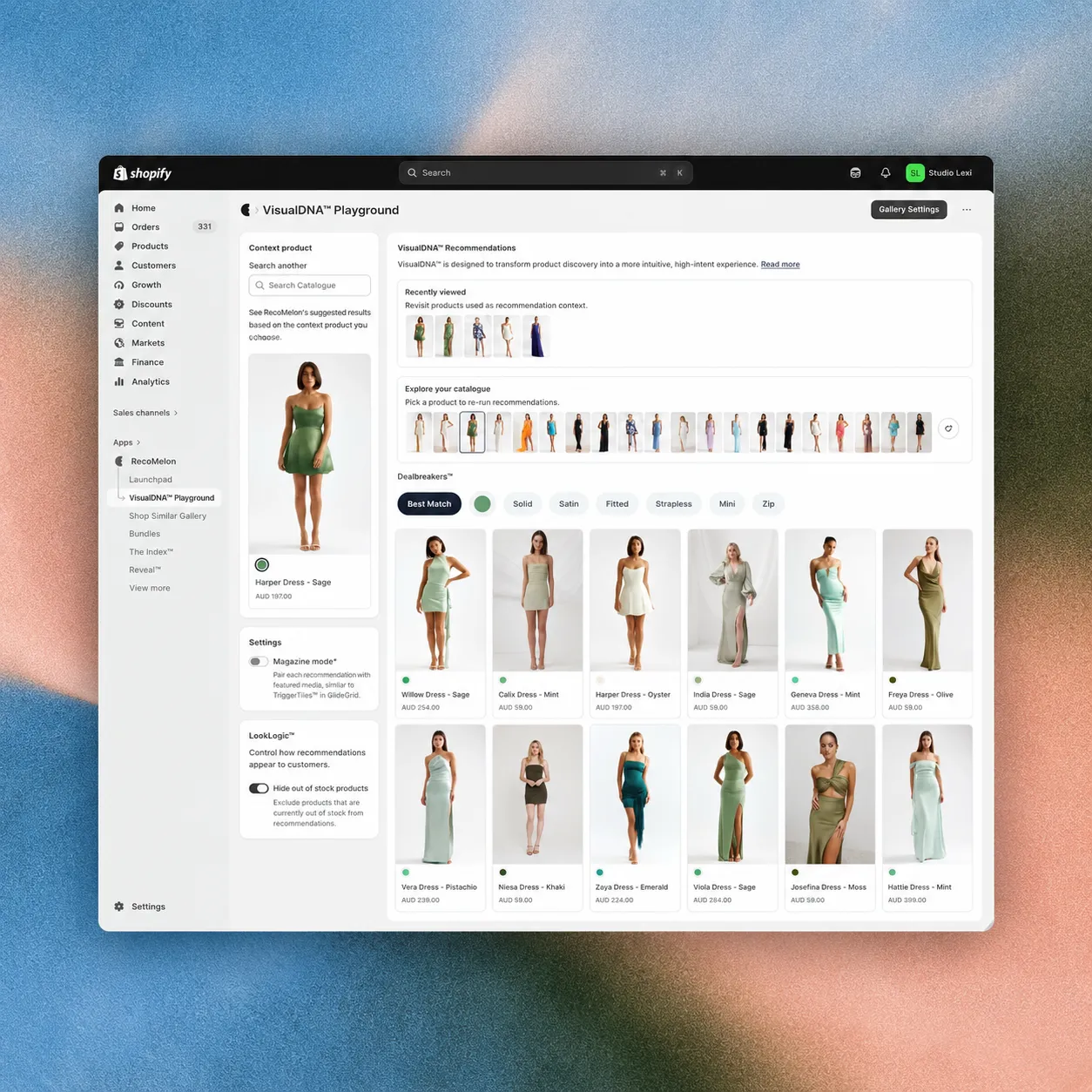
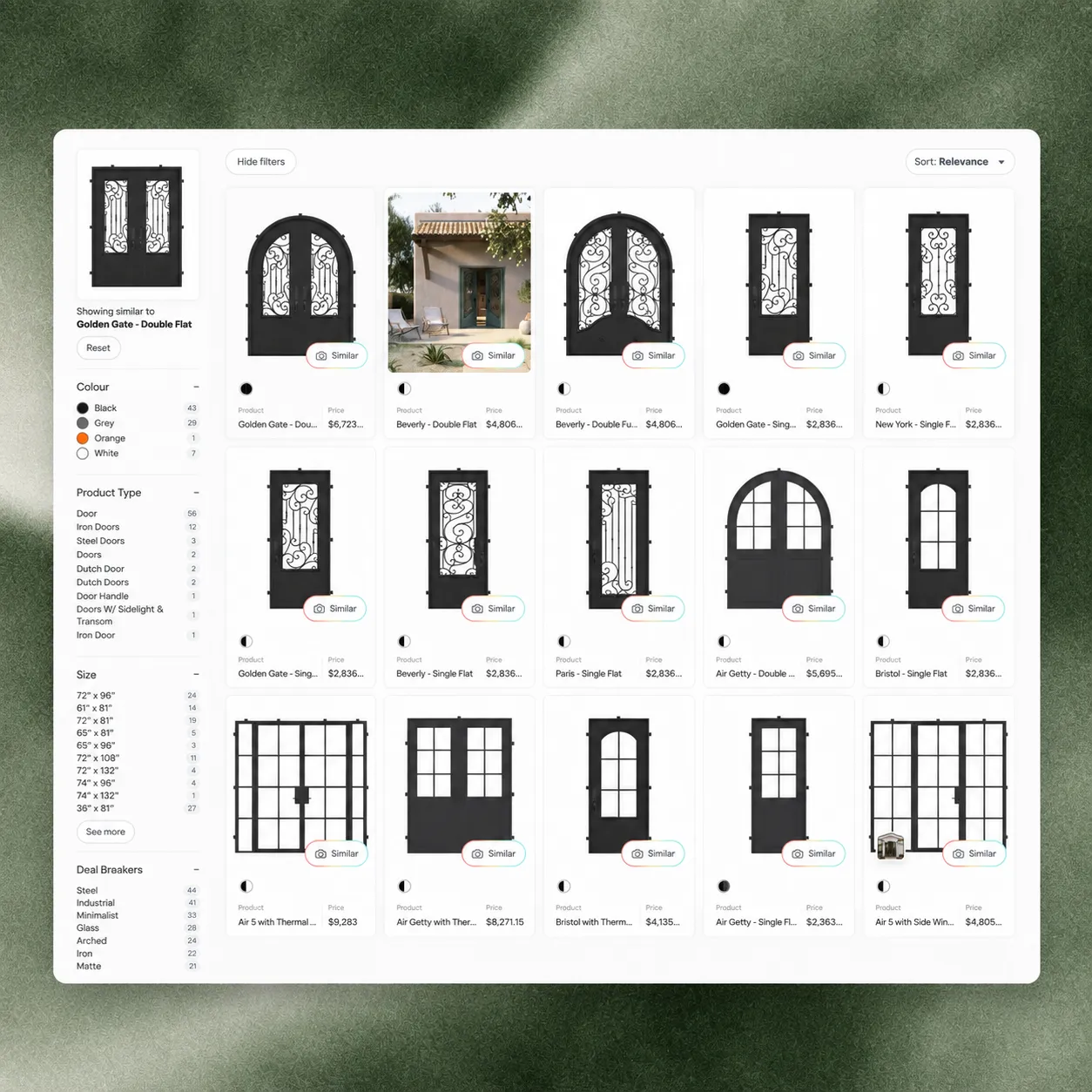
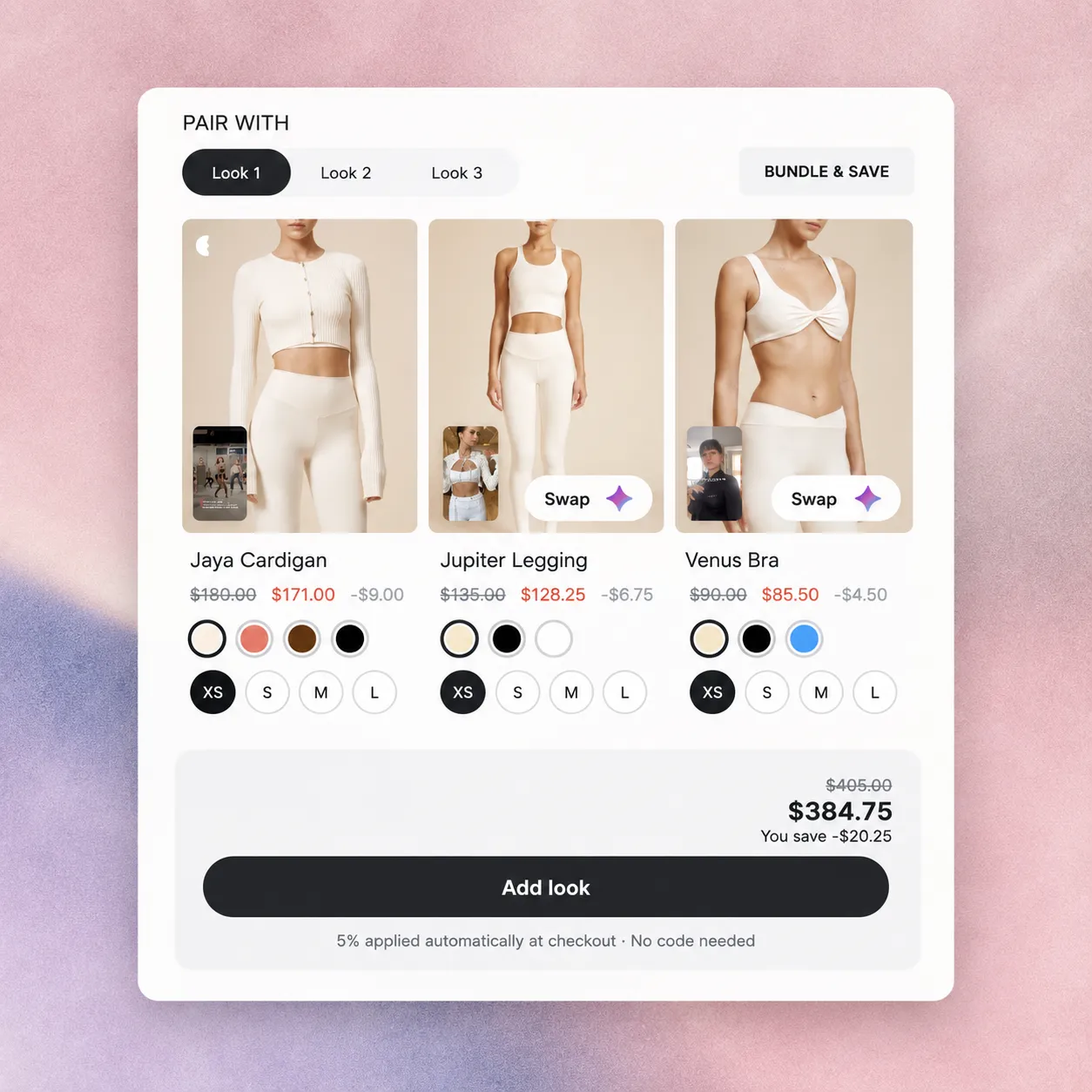
No. RecoMelon can be introduced alongside your existing search and merchandising stack. Start with the gaps that are hardest to solve today - visual similarity, new and long-tail product discovery, PDP alternatives, smart collections or complementary bundles - while your current search remains in place.
For enterprise teams already using Algolia, Constructor, Nosto, Klevu or a custom search layer, this creates a lower-risk path to evaluation. RecoMelon can complement the existing retrieval layer first; The Index™ can then take a larger role only where testing shows a better shopper or commercial outcome.
Implementation is scoped around catalogue feeds, storefront architecture, analytics, markets and ownership of each discovery surface, rather than assuming a rip-and-replace migration.
Can RecoMelon work with Algolia?
Yes. RecoMelon can be introduced alongside an Algolia-powered Shopify storefront. Keep your existing search in place while evaluating visual recommendations, PDP alternatives, Smart Collections or Bundles on selected surfaces. Scope catalogue feeds, storefront integration, analytics and ownership of each surface before deciding whether The Index™ should take on a larger role. This does not assume a native Algolia connector.
Can RecoMelon work with Nosto?
Yes. RecoMelon can be evaluated alongside an existing Nosto setup on a Shopify storefront. Agree which platform owns each search, recommendation or merchandising placement, then test RecoMelon on the surfaces where it adds value. Coordinate catalogue data, market context and measurement so overlapping widgets or rules do not create conflicting experiences. A native Nosto connector is not assumed.
Can RecoMelon replace Shopify Search & Discovery?
RecoMelon can complement Shopify Search & Discovery, and The Index™ can take on search and collection discovery where the deployment supports it. Replacement should follow a feature and relevance review: compare search behaviour, filters, synonyms, merchandising rules, regional handling and analytics with your current setup. Validate the required journeys before retiring existing functionality; this is not a blanket promise of feature-for-feature parity.
How does RecoMelon handle 100,000+ products?
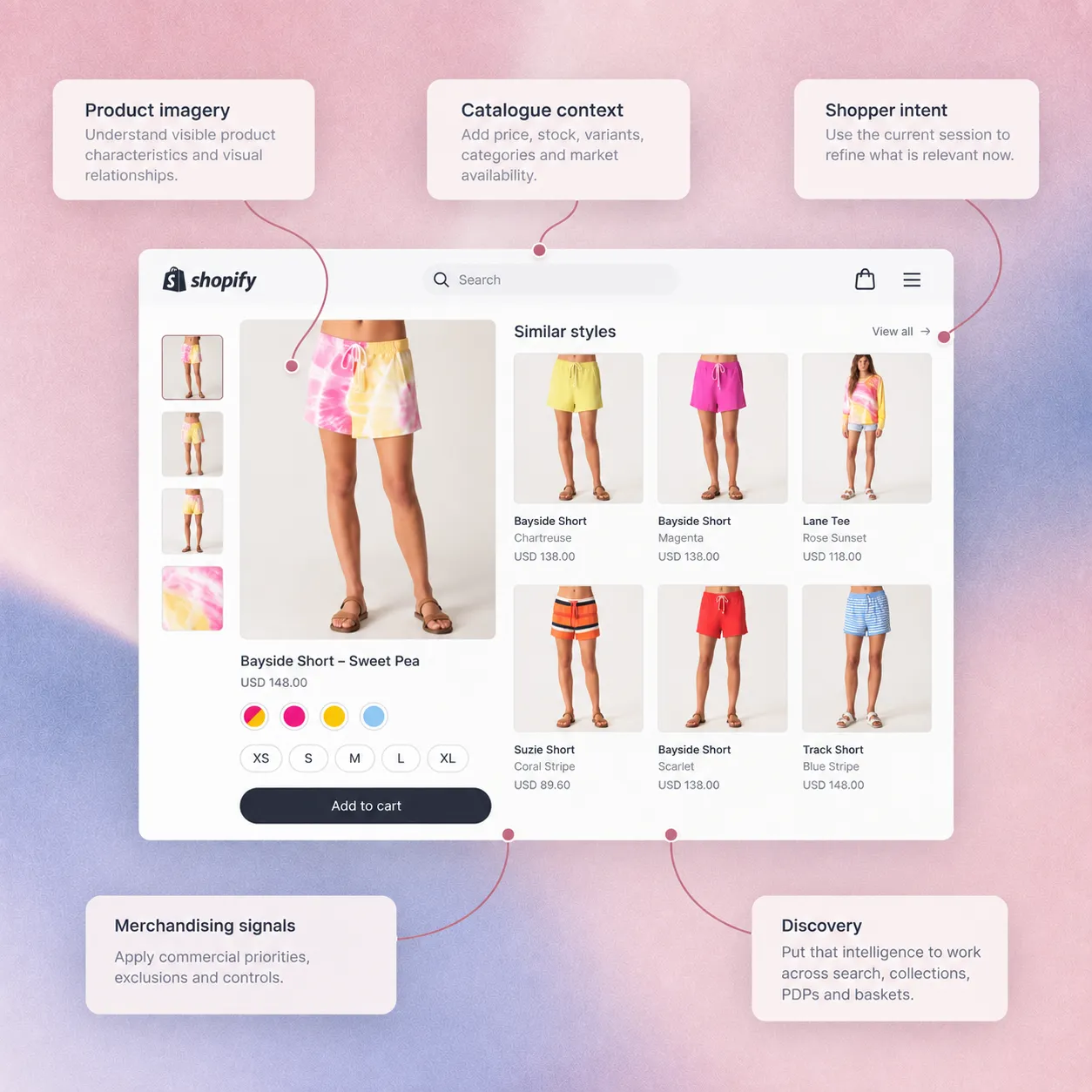
RecoMelon uses product imagery and catalogue context to create attributes and relationships across large ranges, with behavioural signals adding context as shoppers interact. New and long-tail products can become discoverable without waiting for extensive purchase history. DecoratorsBest’s published case study covers 230,000 SKUs. For your catalogue, scope ingestion, variants, refresh frequency, regional availability and storefront performance before rollout.
Does RecoMelon support Shopify Plus and headless Shopify?
Yes. Shopify and Shopify Plus deployments can use Shopify 2.0 blocks, sections or tailored theme integrations. Headless storefronts can use API-led delivery within their existing presentation layer. Confirm the discovery surfaces, catalogue and market structure, caching, analytics, performance expectations and release ownership with the implementation team; headless deployment is scoped to the storefront architecture.
Do merchandising teams retain control when using RecoMelon AI?
Yes. MerchAlchemy™, boostbias and inclusion/exclusion controls let teams shape what is promoted, excluded, prioritised or constrained while RecoMelon develops the underlying product intelligence. Smart Collections and The Index™ bring that intelligence into discovery. Define commercial priorities such as availability, margin, campaign priority, newness and market relevance, then confirm which catalogue signals and controls support the intended outcome.
Does RecoMelon require product tagging or manual attribute creation?
No manual classification programme is required to get started. IntentWeave™ can derive visual product intelligence from product imagery and catalogue context, reducing dependence on perfectly maintained tags and metafields across large ranges. Existing catalogue data still supplies commercial facts such as price, stock, variants and market availability, and can be used alongside RecoMelon’s visual intelligence.
Can RecoMelon start with one category or market?
Yes. A phased rollout is often the lowest-risk way to evaluate RecoMelon. Start with a representative category, market or high-value discovery surface, establish the baseline and measurement approach, then expand only where the shopper and commercial data support it.