Vertex AI Search alternative for Shopify discovery

RecoMelon vs Vertex AI Search for Shopify product discovery

Vertex AI Search supports AI-powered search experiences across enterprise data and applications. RecoMelon is designed around Shopify catalog discovery, connecting visual product intelligence with natural-language search, Smart Collections, PDP alternatives and complementary bundles. Compare the scope, implementation model and commerce outcomes required.

The Index search interface showing a natural language query and matching products

The discovery problem

Define the commerce task within the wider AI search scope.

A Google Cloud search program may cover information and applications well beyond the Shopify catalog. The storefront brief should identify the particular product decisions to improve: interpreting a shopping request, comparing a look or finding an alternative that is actually available.

Agree those journeys before evaluating products. Enterprise information retrieval and product discovery may share search concepts while requiring different interfaces, catalog rules, operational owners and evidence of success.

Where RecoMelon fits

Connect shopper language with product-level choices.

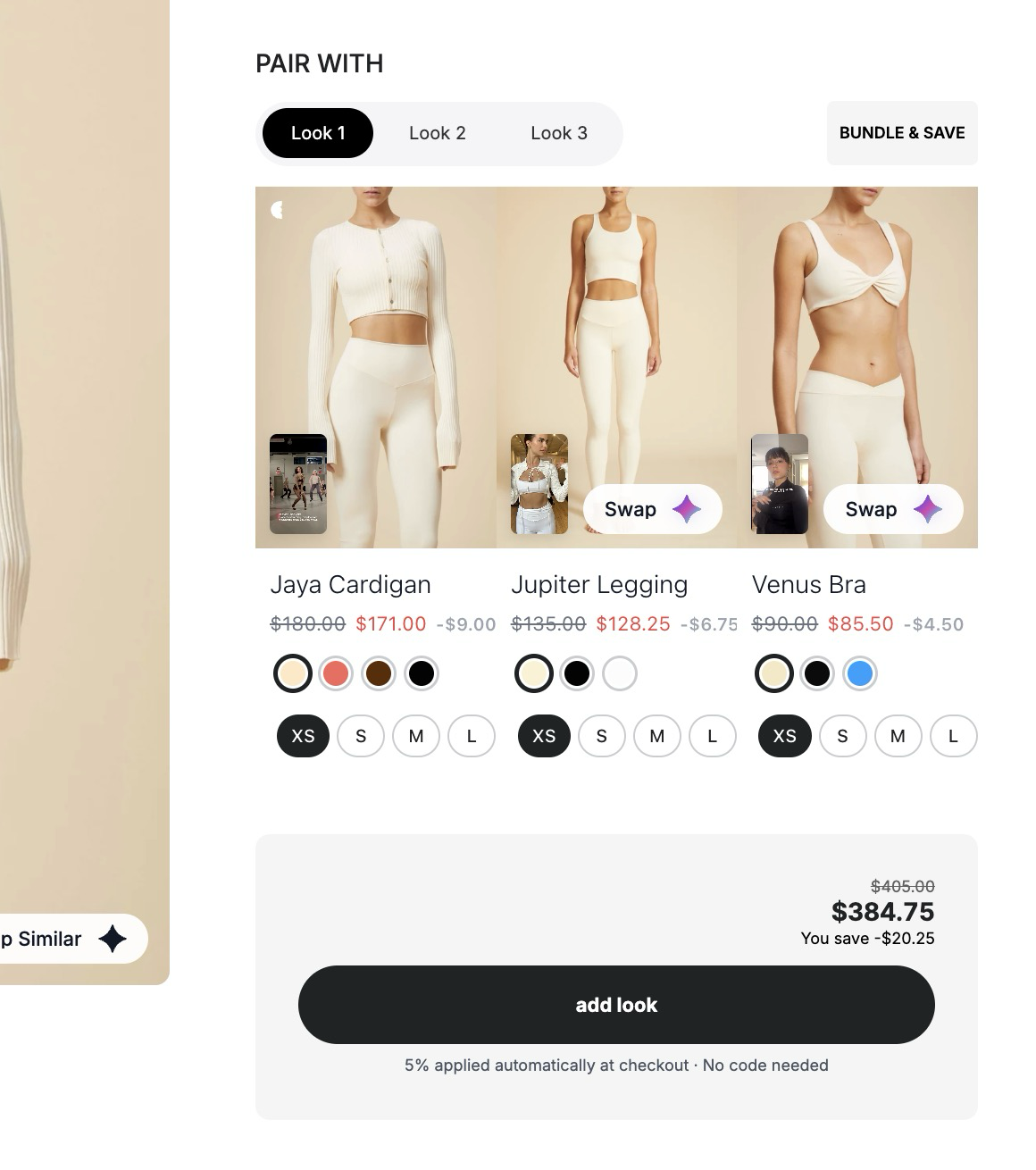
The Index™ supports natural-language product search, while VisualDNA™ connects products through their visual characteristics. Reveal™ and Shop Similar can support a shopper who has found a promising item but still needs a different detail or alternative.

Evaluate the relevant RecoMelon surface within Shopify using the brand's own products. A successful test on that surface would establish its value for the shopping task, not equivalence with the wider capabilities of a Vertex AI Search deployment.

Coexistence and implementation

Scope the boundary with the Google Cloud team.

Retain the existing Google Cloud responsibilities that sit outside the proposed storefront test. Document the catalog source, product and variant identifiers, market rules, rendering responsibilities and measurement events needed for the RecoMelon surface.

A native Vertex AI Search connector is not assumed. Confirm data access, implementation ownership and fallbacks with the teams responsible for both environments. Avoid making an enterprise search migration a prerequisite for a narrowly defined product-discovery evaluation.

Evaluation and evidence

Use shopping outcomes to assess the storefront test.

Create a set of representative product queries and visual-choice journeys. Define search success and relevant product exposure, then assess exploration, recommendation engagement and progression to purchase within the agreed audience.

Review conversion and average order value with a controlled comparison where feasible. Include implementation effort and ongoing catalog operations in the decision, and keep conclusions limited to the use cases and markets actually tested.

How should a Shopify brand compare RecoMelon with Vertex AI Search?

Start with the job the search experience must perform. A broad enterprise search program and a storefront product-discovery program may require different data, interfaces, governance and measures of success.

Can the technologies coexist?

Yes. Define which platform owns each experience and how catalog, user, analytics and market data move between them. A native Vertex AI Search connector is not assumed.

What should a test measure?

Use representative product queries and journeys to compare relevance, catalog coverage, product exploration, conversion, order value and ongoing operating effort.

Choose the right search layer for the Shopify journey

Share the current Google Cloud scope and the product-discovery gaps in Shopify. We’ll define a contained RecoMelon test.

Compare on your catalog