A practical review for large Shopify catalogs

Find where your Shopify catalog is becoming difficult to discover

A large catalog can contain thousands of relevant products while shoppers repeatedly encounter the same narrow set. RecoMelon’s catalog discovery audit reviews the search, collection, PDP and basket journeys that determine how much of the range can realistically be found.

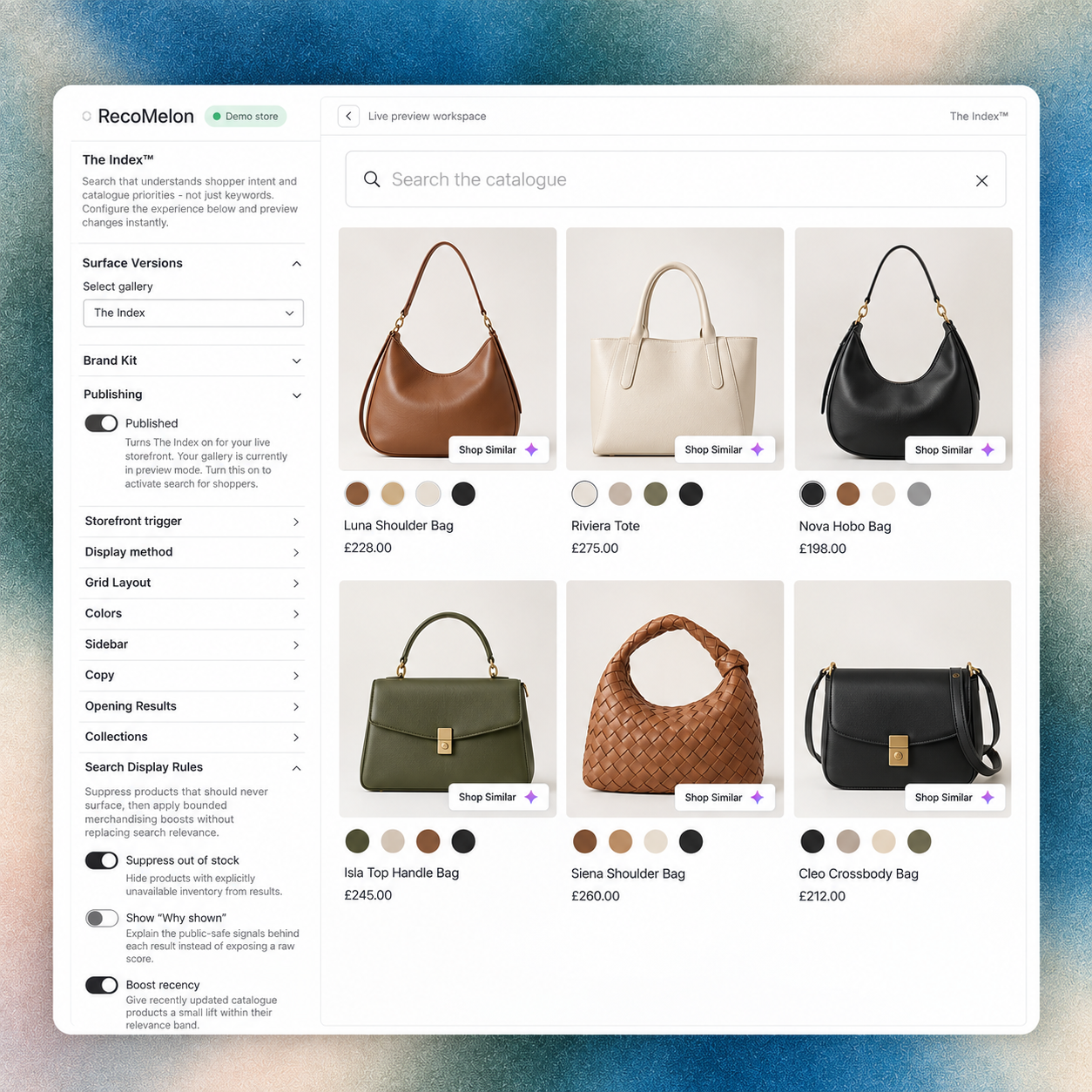
The Index search interface showing a natural language query and matching products

The discovery problem

Find where a rich catalog becomes a narrow experience.

A store can offer substantial choice while repeatedly exposing the same products. Search language, rigid collection paths and missing PDP alternatives can each limit the range that a shopper can realistically discover.

Bring examples of those dead ends, alongside the store URL, approximate SKU count, priority markets and categories. The aim is to identify an observable journey problem before proposing a new surface.

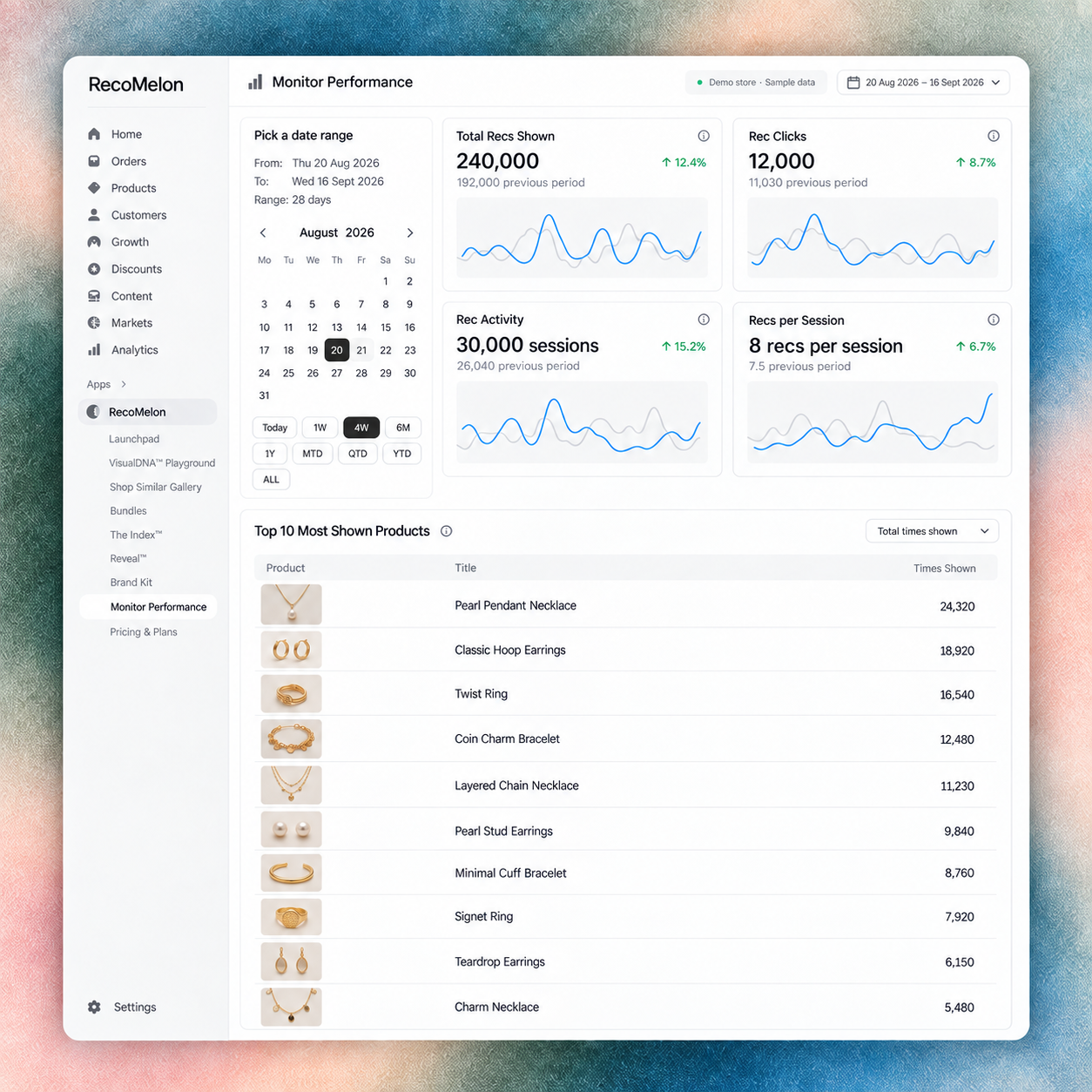
RecoMelon reporting interface with a date selector and sample discovery performance metrics for a catalogue evaluation.

Fit and implementation

Turn the review into a contained discovery test.

  • Fit and implementation


    The discovery task

    Review search, collection browsing, product alternatives and complementary choices against the existing storefront. Where relevant, consider The Index™, Smart Collections, Reveal™ or Bundles™ as possible responses to a specific gap.

    RecoMelon reporting interface with a date selector and sample discovery performance metrics for a catalogue evaluation.

  • Fit and implementation


    The implementation boundary

    Record what can remain in the current stack, which product data is needed and who owns implementation.

    RecoMelon The Index backoffice designer with storefront discovery settings and a complete product collection preview.

  • Fit and implementation


    The conditions to validate

    The initial review is a starting point for scoping; any deeper technical or data audit is agreed separately.

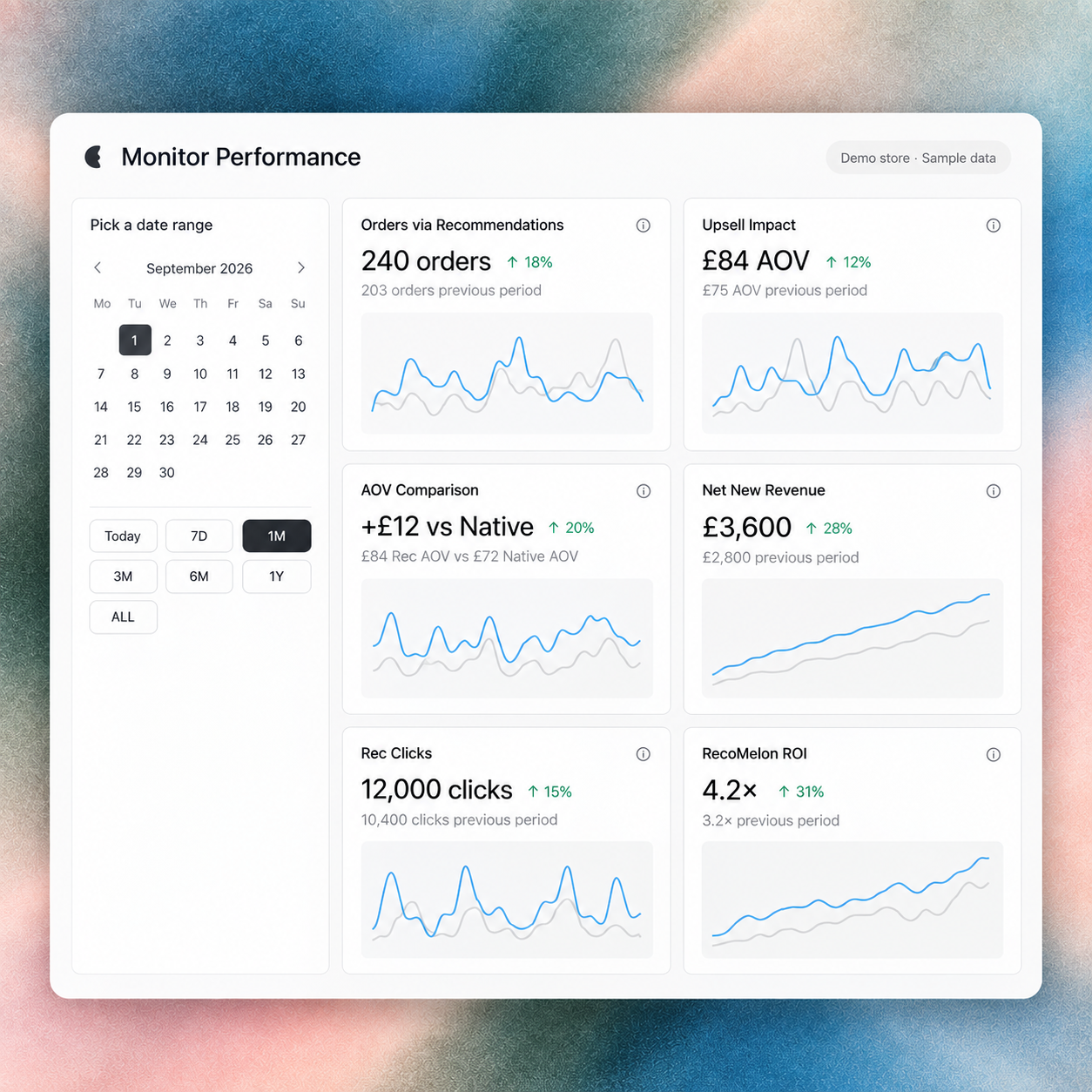
    RecoMelon Monitor Performance dashboard with a date picker, recommendation orders, AOV, revenue, clicks and ROI cards using sample data.

  • Fit and implementation


    Check variant constraints

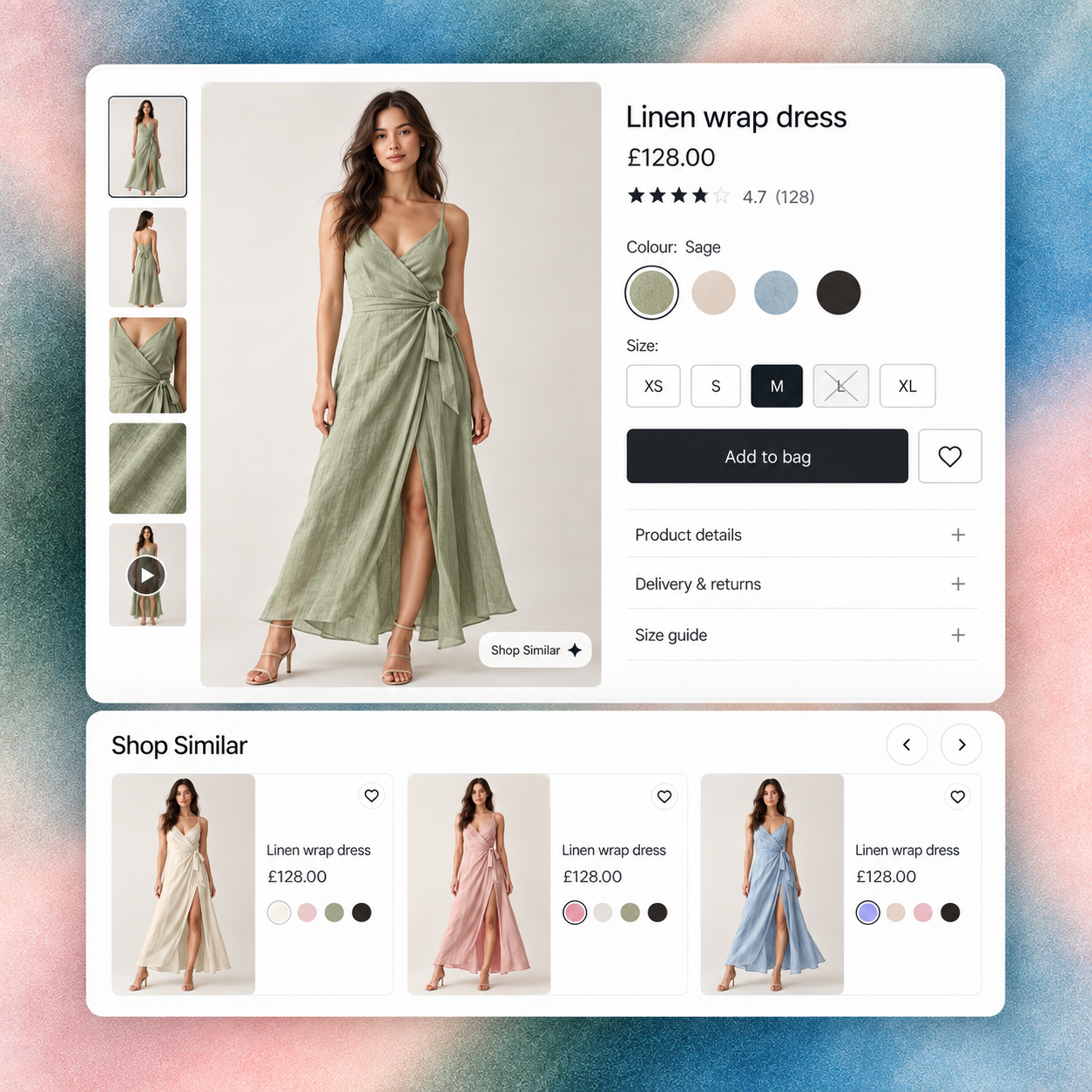
    Include unavailable sizes and alternative colours in the audit so the proposed journey respects actual product eligibility.

    Fashion product page for a sage wrap dress with colour and size choices, an unavailable size and RecoMelon Shop Similar alternatives.

  • Fit and implementation


    Review the mobile experience

    Inspect how the product page and related alternatives work on a narrow screen before agreeing the test scope.

    Mobile fashion product page beside an open RecoMelon Shop Similar panel with related dresses and colour choices.

Evaluation and evidence

Agree the evidence before making the change.

Choose a first surface and establish its current product exposure, engagement and progression to purchase. Define the audience, comparison method and operational responsibilities before the test begins.

Assess whether the change expands useful catalog reach and improves the chosen journey. Include implementation effort and merchandising workload in the decision, rather than treating a larger number of interactions as sufficient proof of value.

What does the catalog discovery audit examine?

Compare the platforms when search, recommendations and merchandising need to work across a large or visually complex catalogue.

Bloomreach presents a broad discovery platform. RecoMelon concentrates on making product imagery and catalogue context operational inside Shopify journeys.

What makes RecoMelon different?

RecoMelon builds visual relationships between products and uses them across The Index™ search, Smart Collections, Reveal™ PDP discovery and Bundles™. This can be particularly useful where style, colour, silhouette, pattern or finish affect relevance.

Must Bloomreach be removed first?

No. Scope which platform owns each surface and run a controlled test. RecoMelon can begin with PDP alternatives, a selected collection or complementary-product discovery while the current search stack remains live. No native Bloomreach connector is assumed.

What should procurement evaluate?

Review catalogue preparation, integration ownership, merchandising workload, time to value, regional requirements, explainability, reporting and the commercial result on a representative category.

The review focuses on the surfaces where product intent is created, refined or lost. This includes search language, filters, collection structure, long-tail exposure, PDP alternatives, zero-result recovery, complementary products and measurement.

What should we share?

Provide the store URL, approximate SKU count, priority markets, highest-value categories and the search or merchandising tools currently in use.

What will we receive?

The initial review identifies the strongest discovery gaps, what can remain in the existing stack and a focused surface that could be tested first. Any deeper technical or data audit is agreed separately.


Bring us the catalog. We’ll find the discovery gaps.

Request a review and we’ll map the smallest credible route to improving product discovery without assuming a full platform replacement.

Request a catalog review