Visual AI search and merchandising for Shopify fashion

Help fashion shoppers find the right style across your full catalogue

Fashion shoppers rarely think in exact product names. They look for a silhouette, colour, occasion, neckline, sleeve or fit. RecoMelon interprets those visual characteristics across search, collections and PDP recommendations, helping more of a fashion catalogue become relevant without a manual tagging programme.

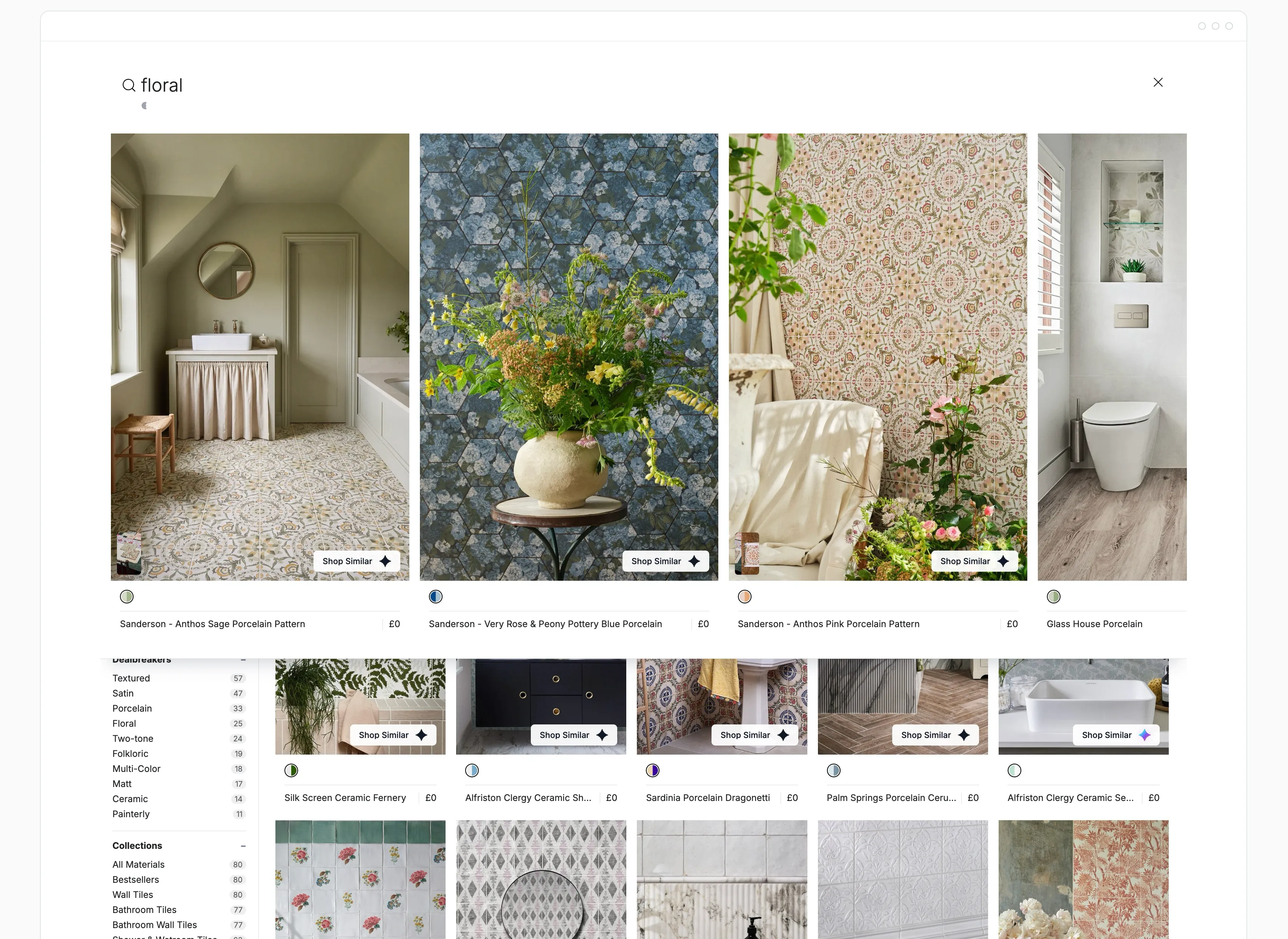
The Index search interface showing a natural language query and matching products

The discovery problem

Help shoppers keep the look and change the detail.

Fashion shoppers often recognise a promising silhouette before they know the product name. A neckline, sleeve, colour or print can then become the reason that an otherwise suitable item is rejected.

Treat that moment as a refinement task. A useful next step should retain the visual qualities the shopper likes while making alternatives easy to explore. New drops and low-history styles also need a route into that journey before popularity data accumulates.

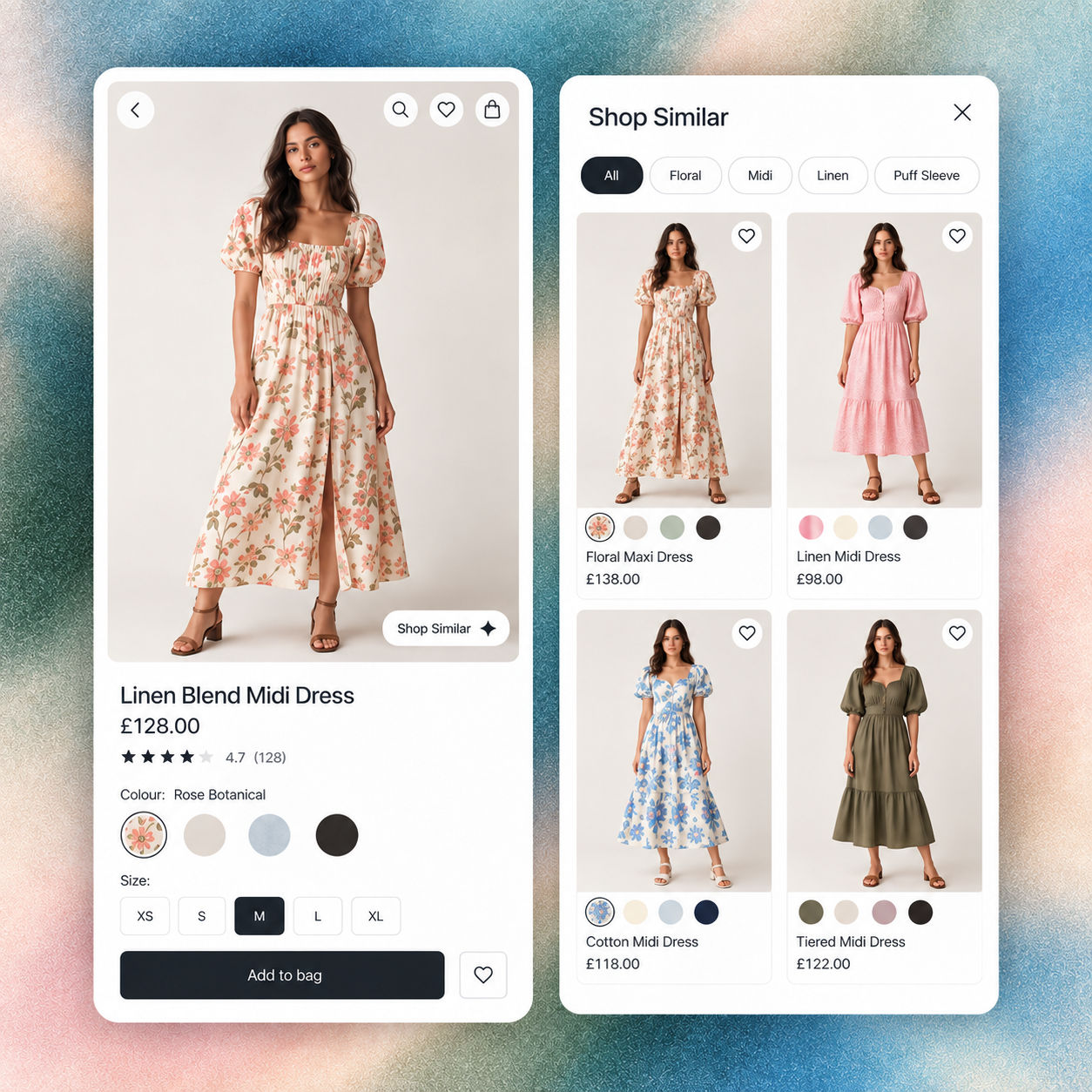
RecoMelon fashion product page showing a floral midi dress, colour and size options, and a Shop Similar row of alternative dresses.

Where RecoMelon fits

Connect visual preference with practical refinement.

VisualDNA™ matches visible characteristics such as cut, silhouette, colour and pattern. IntentWeave™ supports usable visual attributes, while Shop Similar and Reveal™ let shoppers explore alternatives from the product already in view. Bundles™ can be evaluated separately for complementary looks.

Catalogue data remains the source of truth for size, price, availability, composition and market eligibility. Images can support visual relevance; they should not be used to infer an exact fit, material specification or product claim that the catalogue does not establish.

  • Keep the silhouette

    Start with the shape the shopper is drawn to, then explore alternatives with a different neckline, sleeve or hem. Review visible similarities alongside the actual product data.

    RecoMelon fashion product page showing a floral midi dress, colour and size options, and a Shop Similar row of alternative dresses.

  • Change the colour or print

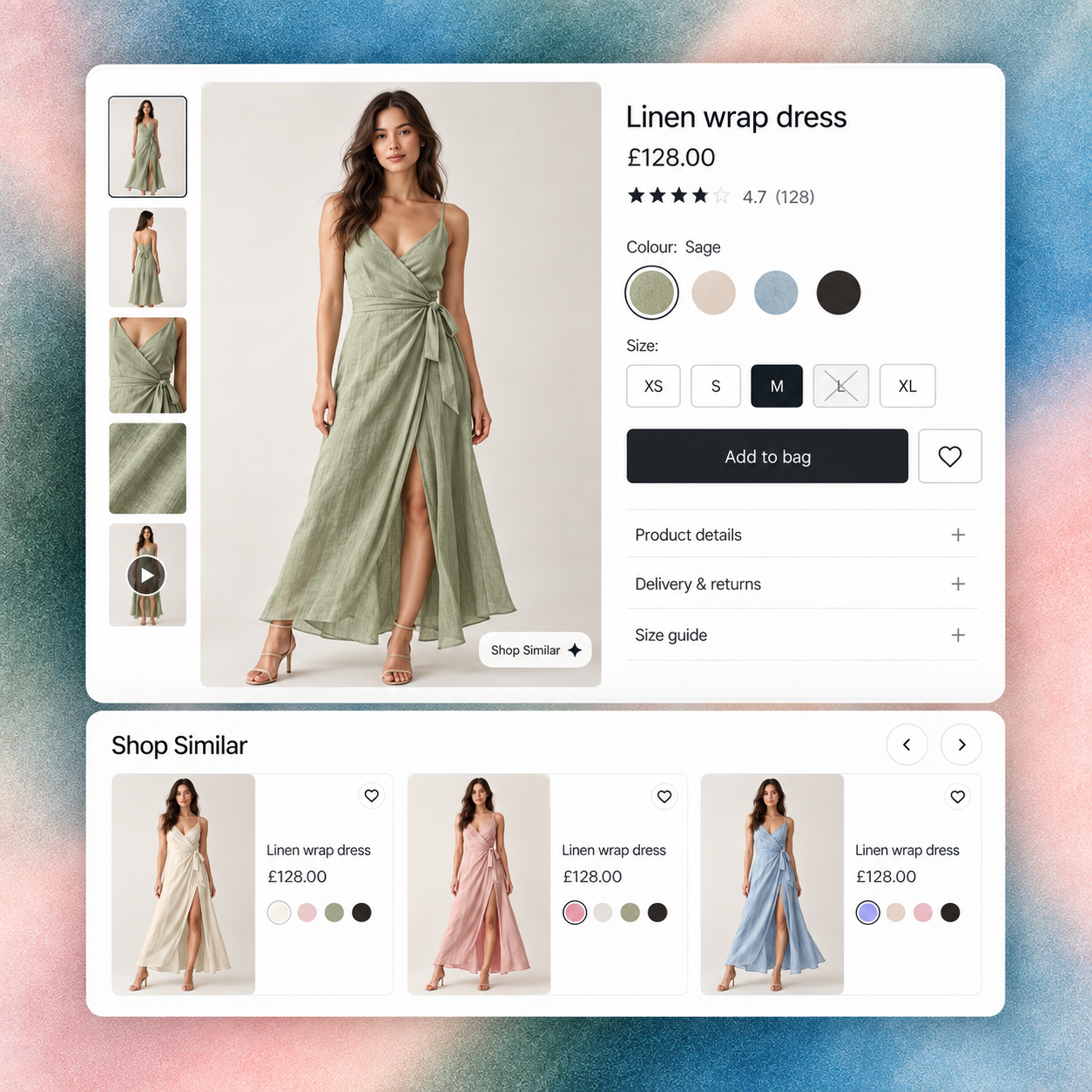
    Use a promising product as a visual starting point. Show how shoppers could move between colour families or patterns without returning to a generic product grid.

    Fashion product page for a sage wrap dress with colour and size choices, an unavailable size and RecoMelon Shop Similar alternatives.

  • Build a complementary look

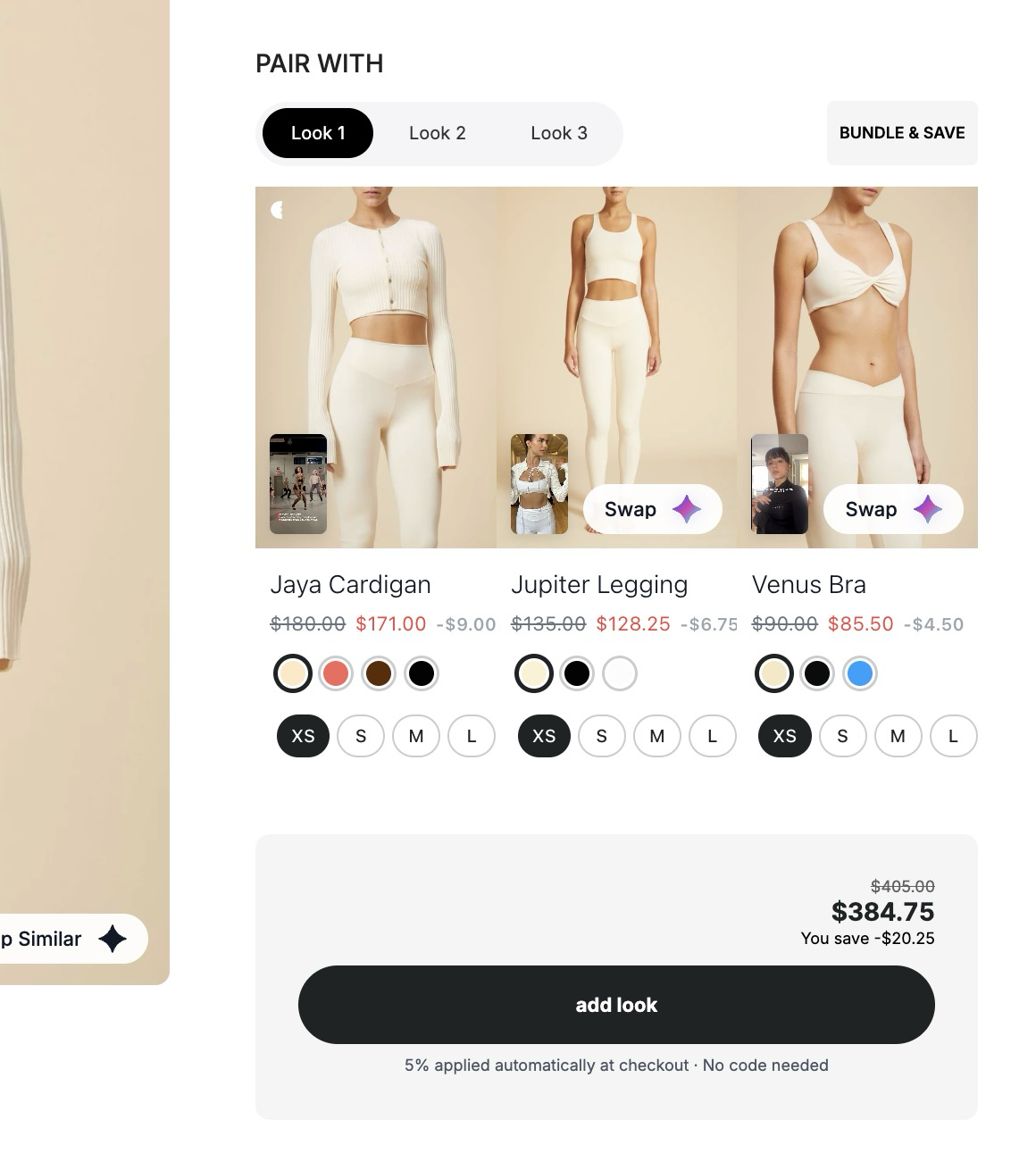
    Treat a complete-look journey as a separate discovery task. Review complementary combinations against the brand's assortment and merchandising rules.

    RecoMelon Bundles showing a dress, straw bag and sandals with Look tabs, product swap controls, size choices and Add Look button.

Coexistence and implementation

Start with a representative fashion category.

Choose a category with a useful range of silhouettes, colours and variants. Review image quality and product grouping, confirm how size availability and market eligibility are supplied, and inspect recommendations across new arrivals as well as established products.

The existing search and collection experience can remain in place while a PDP surface is tested. Agree who owns exclusions, brand rules, presentation and analytics, and check the interaction on mobile where visual comparisons need to remain easy to navigate.

  • Coexistence and implementation


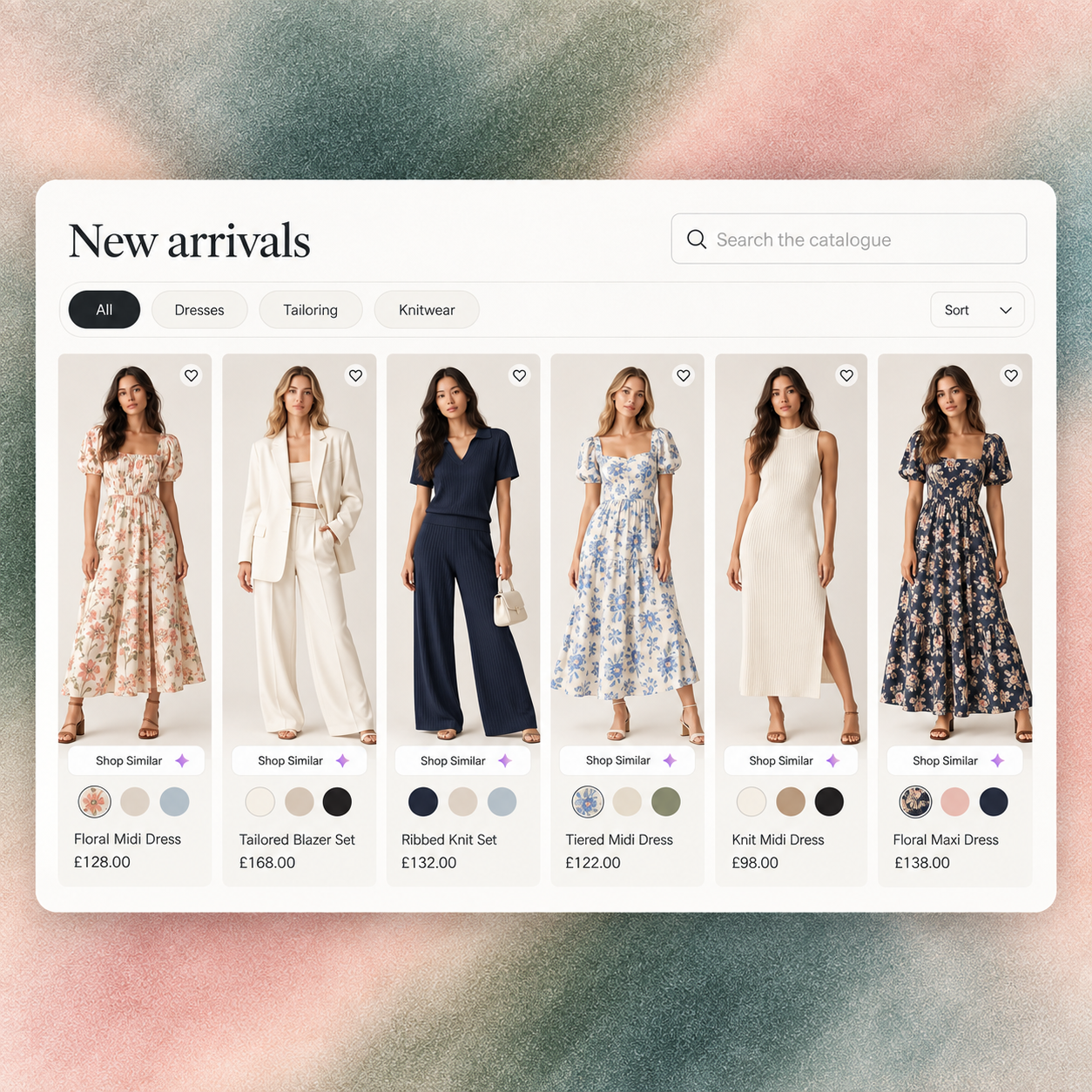
    Review new arrivals

    Use a representative selection from this category and review the proposed experience with the merchandising team.

    RecoMelon New Arrivals fashion collection with varied tailoring, dresses and knitwear, category filters and Shop Similar controls.

  • Coexistence and implementation


    Check size availability

    Compare the visual choice with the authoritative product and variant data before including it in the test.

    Fashion product page for a sage wrap dress with colour and size choices, an unavailable size and RecoMelon Shop Similar alternatives.

  • Coexistence and implementation


    Compare mobile journeys

    Review the chosen journey against an agreed baseline and record the work needed to maintain it.

    Mobile fashion product page beside an open RecoMelon Shop Similar panel with related dresses and colour choices.

  • Coexistence and implementation


    Keep alternatives beside the product

    Review how related dresses preserve a shopper’s visual direction while keeping the original product and available options in view.

    RecoMelon fashion product page showing a floral midi dress, colour and size options, and a Shop Similar row of alternative dresses.

  • Coexistence and implementation


    Evaluate complete-look choices

    Assess complementary outfit recommendations separately from product substitutes, including item selection and swap controls.

    RecoMelon Bundles showing a dress, straw bag and sandals with Look tabs, product swap controls, size choices and Add Look button.

Evaluation and evidence

Measure useful exploration, not just more clicks.

Assess whether shoppers move from the original item to relevant alternatives and continue towards a purchase. Review recommendation engagement, products explored, new-product exposure and conversion within the selected category.

If testing complementary looks, include basket value and the quality of the combinations in the review. Account for size availability, promotions and seasonal assortment changes, and distinguish incremental results from orders merely associated with recommendation interactions.

  • Review new arrivals

    Use a representative selection from this category and review the proposed experience with the merchandising team.

  • Check size availability

    Compare the visual choice with the authoritative product and variant data before including it in the test.

  • Compare mobile journeys

    Review the chosen journey against an agreed baseline and record the work needed to maintain it.

How does RecoMelon understand fashion products?

Compare the platforms when search, recommendations and merchandising need to work across a large or visually complex catalogue.

Bloomreach presents a broad discovery platform. RecoMelon concentrates on making product imagery and catalogue context operational inside Shopify journeys.

What makes RecoMelon different?

RecoMelon builds visual relationships between products and uses them across The Index™ search, Smart Collections, Reveal™ PDP discovery and Bundles™. This can be particularly useful where style, colour, silhouette, pattern or finish affect relevance.

Must Bloomreach be removed first?

No. Scope which platform owns each surface and run a controlled test. RecoMelon can begin with PDP alternatives, a selected collection or complementary-product discovery while the current search stack remains live. No native Bloomreach connector is assumed.

What should procurement evaluate?

Review catalogue preparation, integration ownership, merchandising workload, time to value, regional requirements, explainability, reporting and the commercial result on a representative category.

RecoMelon analyses product imagery and catalogue context to identify characteristics that influence fashion decisions. These can include silhouette, cut, colour family, sleeve, neckline, pattern and style intent.

Does it need purchase history?

No. Visual product relationships can support new and long-tail products before substantial behavioural history exists. Behaviour can add context as shoppers interact.

Where can fashion brands use it?

Use the intelligence in The Index™ search, Smart Collections, Reveal™ PDP alternatives, RecShelf recommendations and complementary Bundles™.

Turn visual preference into a governed discovery layer

Bring a priority category, new drop, market and current search stack. We’ll map the lowest-risk surface to test, the product data it needs and the commercial measures that should decide whether to expand.

Request an enterprise catalogue review