Measure Shopify product discovery beyond the click

Connect discovery engagement with commercial outcomes

RecoMelon’s discovery surfaces create signals across search, collections, PDPs and baskets. An analytics plan should connect those interactions with product exploration, conversion and order value while preserving the brand’s existing source of truth.

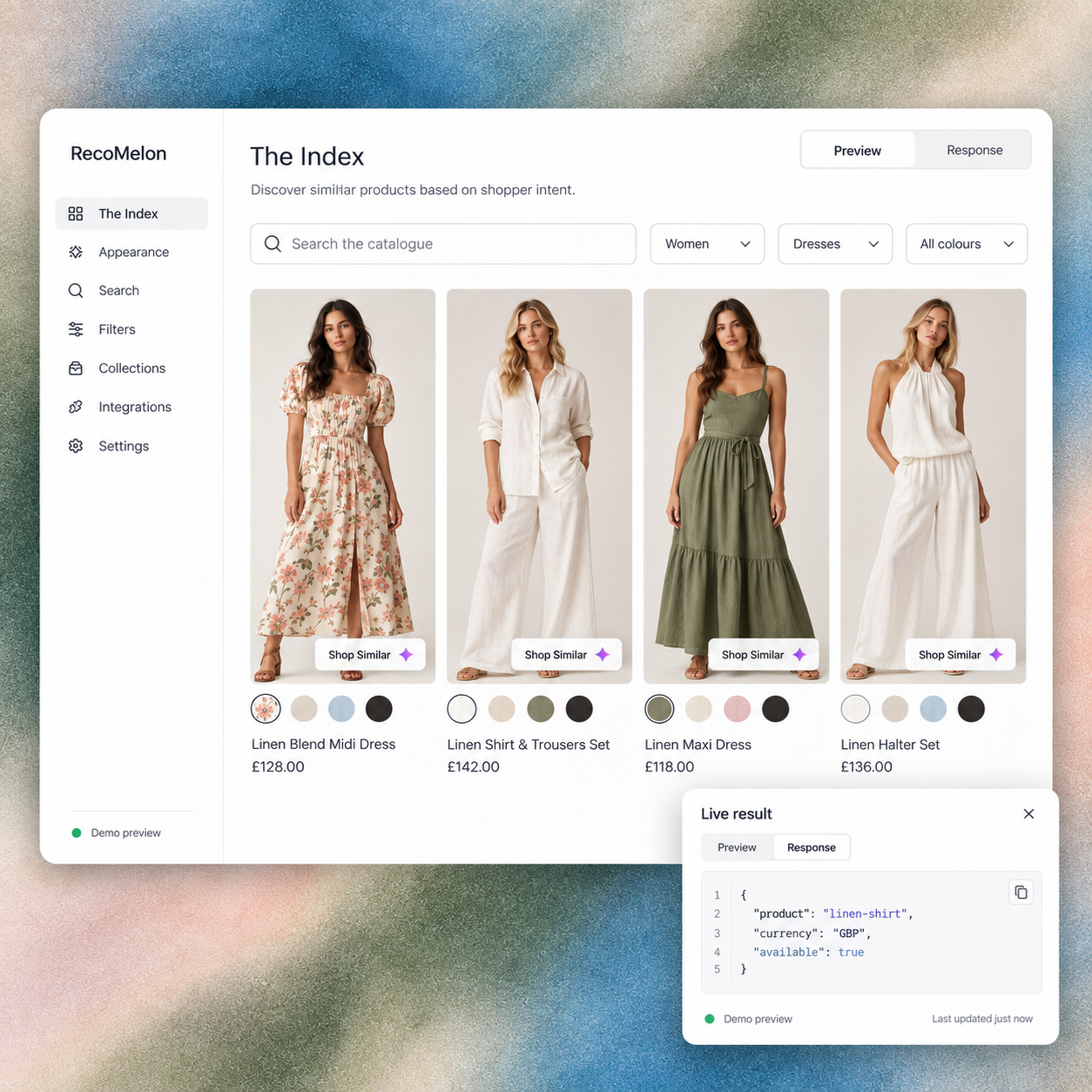
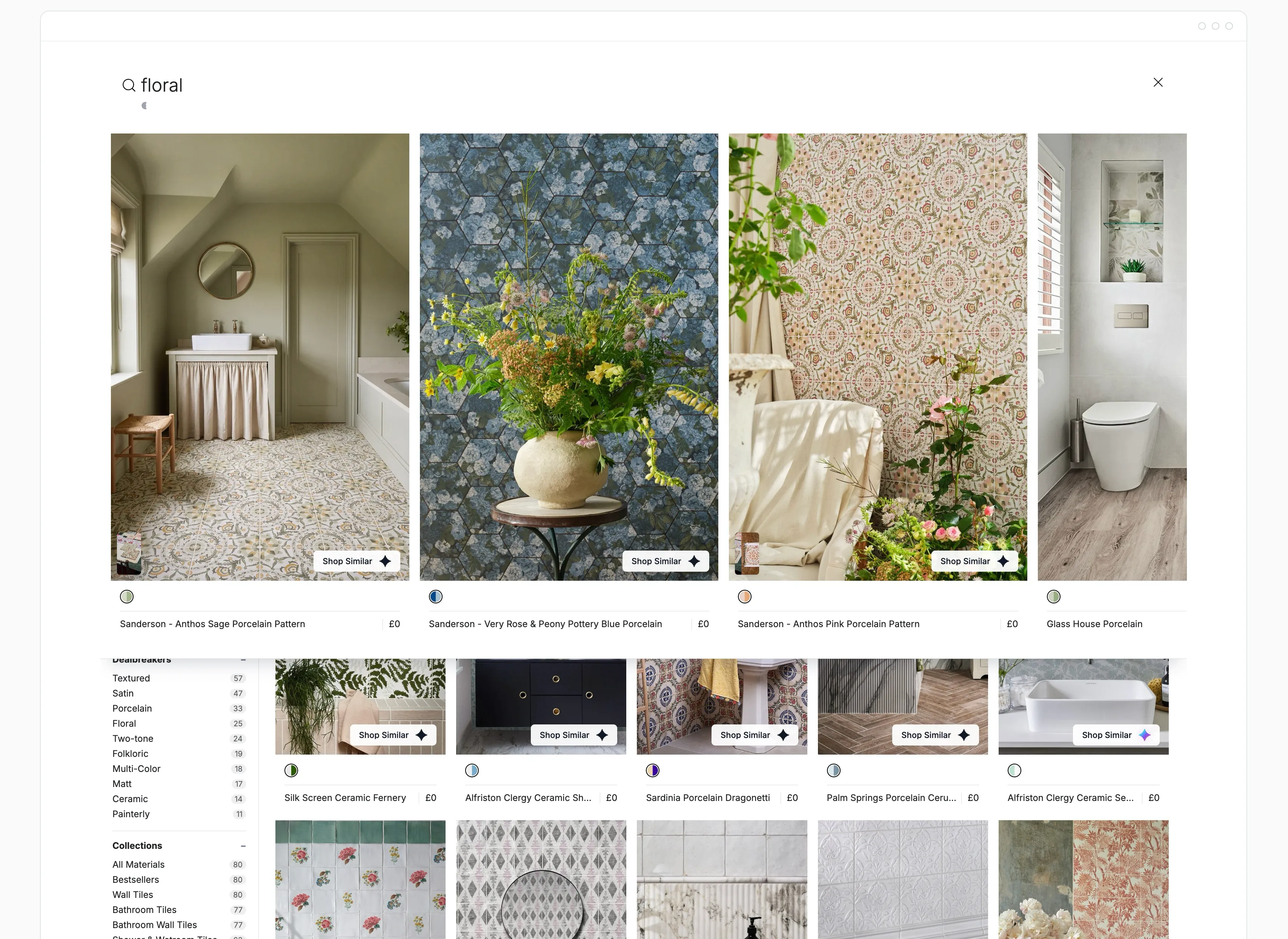
The Index search interface showing a natural language query and matching products

The discovery problem

Make discovery activity interpretable.

A recommendation click, a search interaction and a completed order describe different stages of a journey. Reporting becomes difficult when the storefront and analytics tools use inconsistent event names, product identifiers or attribution windows.

Begin with the commercial question the team wants to answer. Identify the discovery surface and the events needed to connect exposure, exploration and purchase without treating every influenced order as incremental.

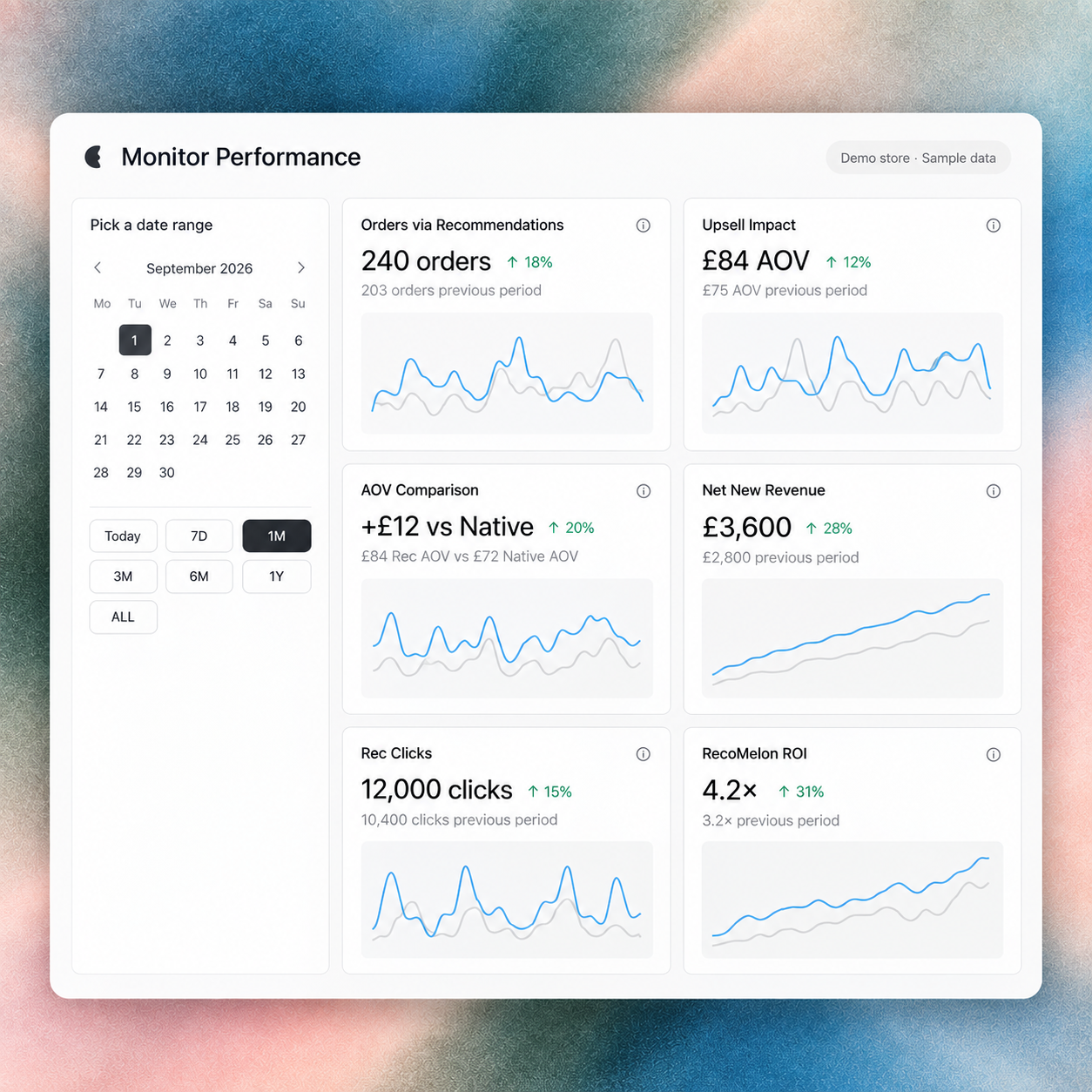
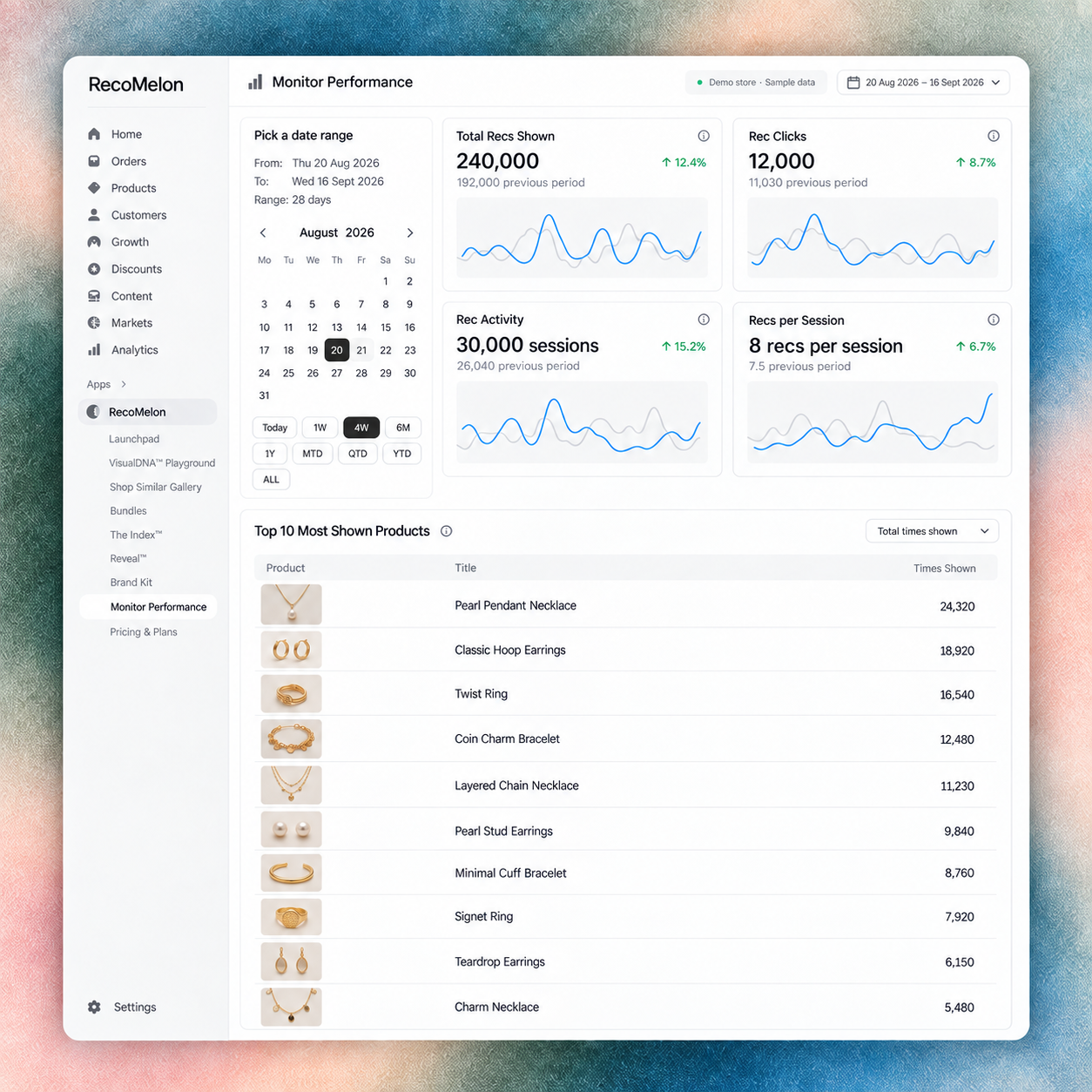
RecoMelon Monitor Performance dashboard with a date picker, recommendation orders, AOV, revenue, clicks and ROI cards using sample data.

Fit and implementation

Scope measurement around the existing analytics setup.

  • Fit and implementation


    The discovery task

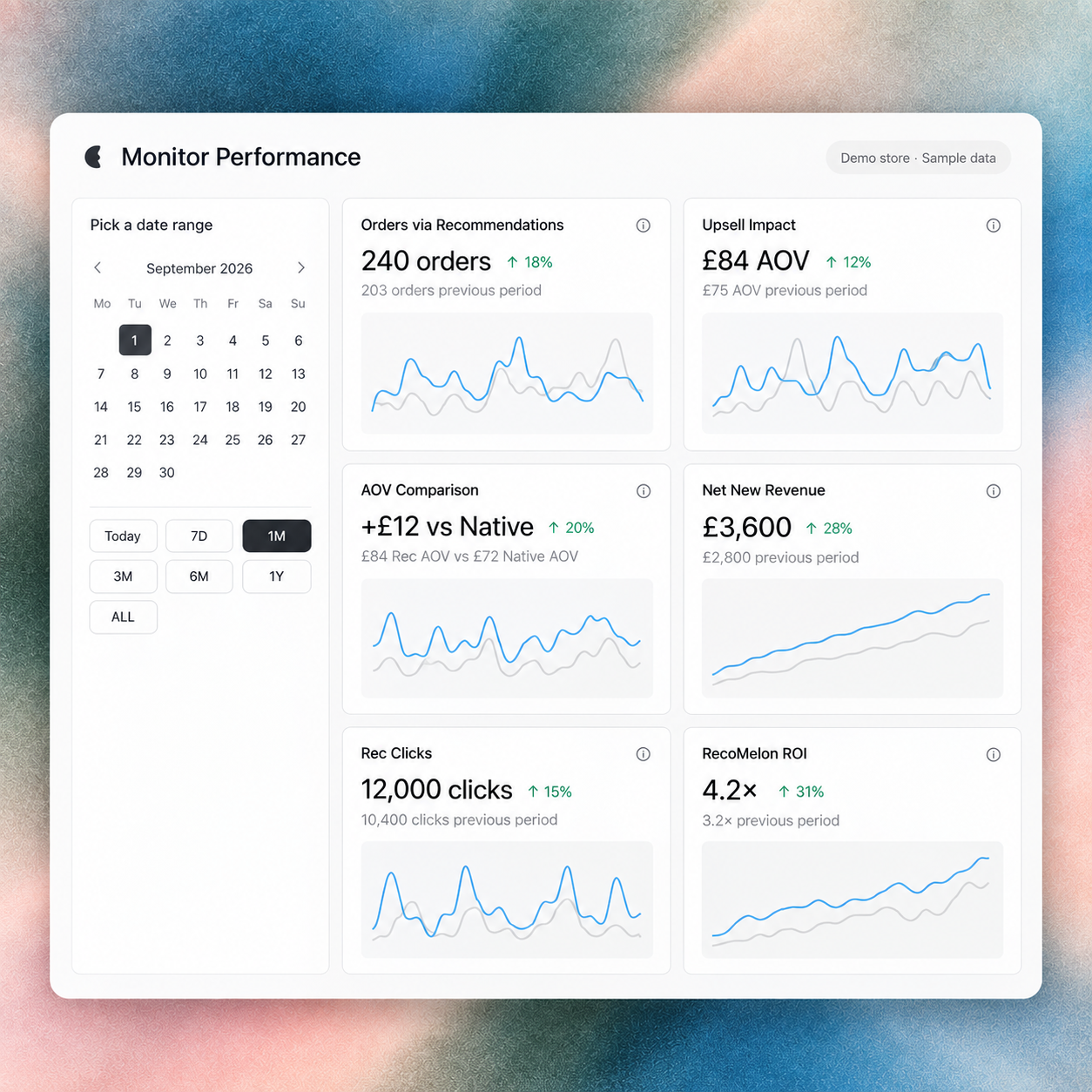
    RecoMelon discovery surfaces can be evaluated through impressions, clicks, products explored and shopping outcomes. Define the required event contract alongside the storefront's Google Analytics configuration and reporting ownership.

    RecoMelon Monitor Performance dashboard with a date picker, recommendation orders, AOV, revenue, clicks and ROI cards using sample data.

  • Fit and implementation


    The implementation boundary

    No automatic integration is assumed.

    Product interface showing structured catalogue data beside a rendered RecoMelon storefront recommendation component.

  • Fit and implementation


    The conditions to validate

    Confirm the data layer, consent behaviour, product identifiers and duplicate-event handling before enabling a test. Keep the existing source of truth for orders and revenue explicit.

    RecoMelon reporting interface with a date selector and sample discovery performance metrics for a catalogue evaluation.

  • Fit and implementation


    Review the journey being measured

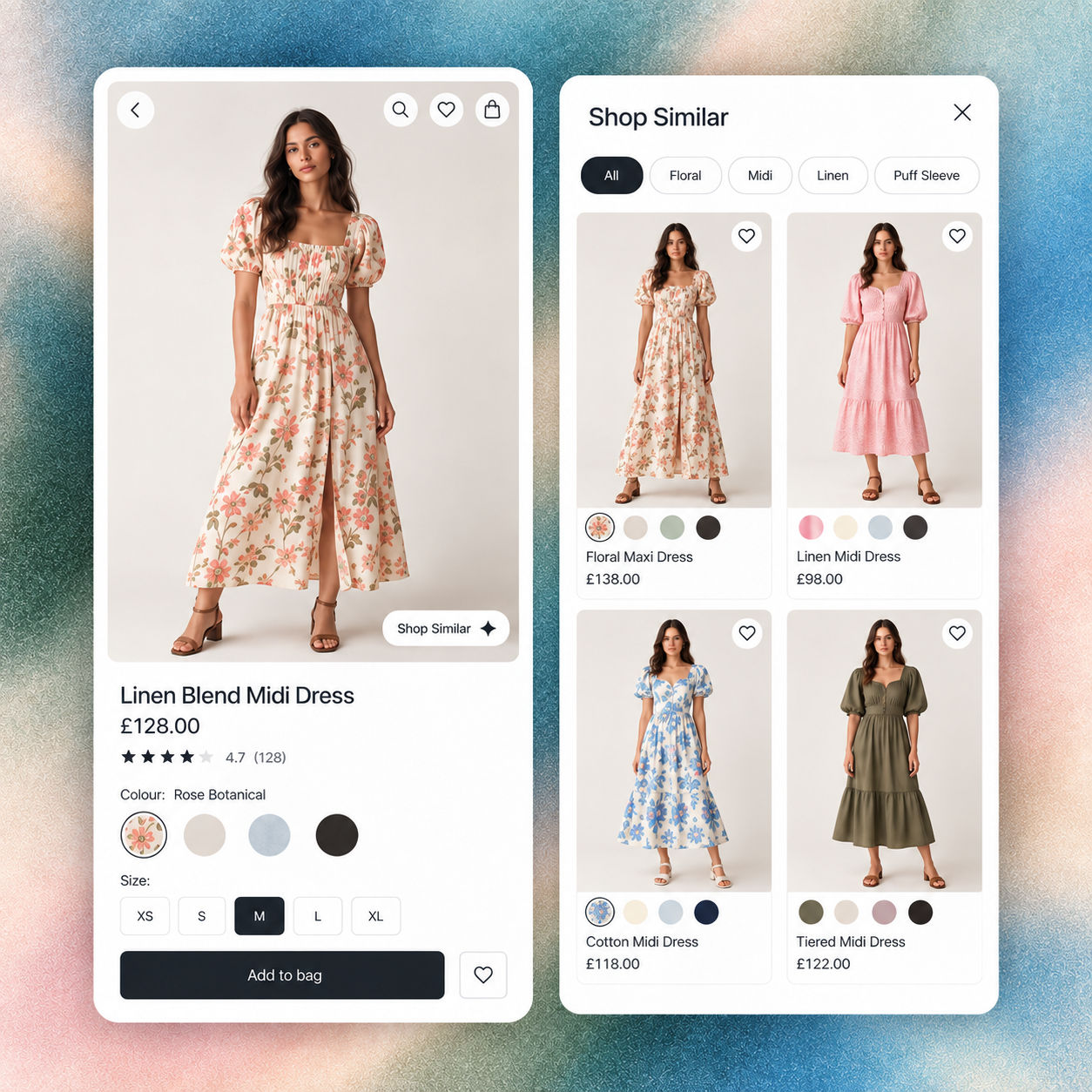
    Use a concrete mobile product-discovery journey to agree which interactions and onward actions belong in the measurement plan.

    Mobile fashion product page beside an open RecoMelon Shop Similar panel with related dresses and colour choices.

  • Fit and implementation


    Distinguish bundle interactions

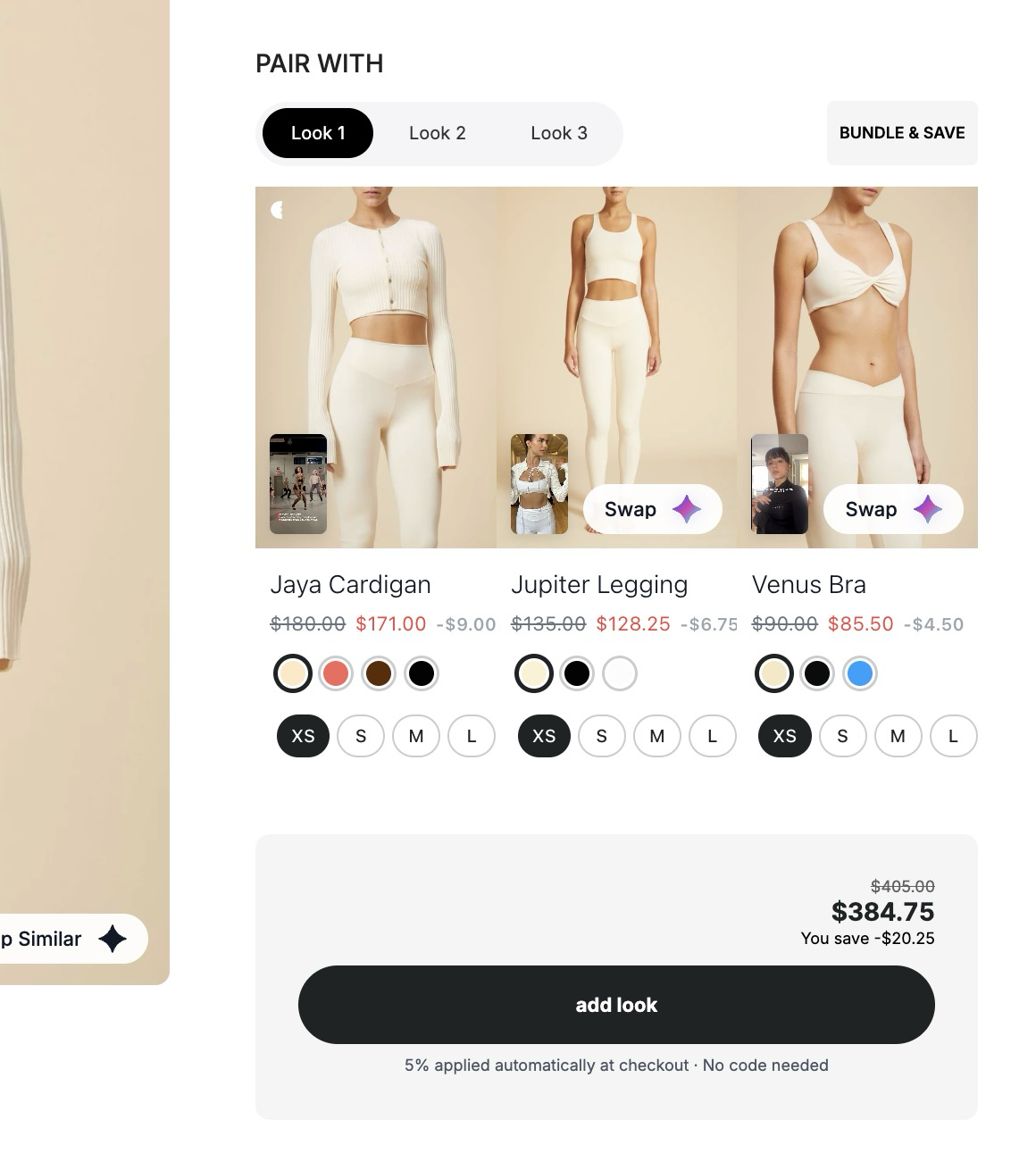
    Review complete-look selection and product swaps when defining the events and commercial outcomes to assess.

    RecoMelon Bundles showing a dress, straw bag and sandals with Look tabs, product swap controls, size choices and Add Look button.

Evaluation and evidence

Separate association from incremental effect.

Agree the eligible audience, baseline or control, test period and definition of influenced orders before reviewing performance. Compare the same measures across treatments and check that event coverage is consistent.

Account for stock changes, promotions and acquisition mix when interpreting conversion or average order value. Document measurement limitations and operational effort so the result remains useful for the next rollout decision.

How should RecoMelon be measured in Google Analytics?

Compare the platforms when search, recommendations and merchandising need to work across a large or visually complex catalogue.

Bloomreach presents a broad discovery platform. RecoMelon concentrates on making product imagery and catalogue context operational inside Shopify journeys.

What makes RecoMelon different?

RecoMelon builds visual relationships between products and uses them across The Index™ search, Smart Collections, Reveal™ PDP discovery and Bundles™. This can be particularly useful where style, colour, silhouette, pattern or finish affect relevance.

Must Bloomreach be removed first?

No. Scope which platform owns each surface and run a controlled test. RecoMelon can begin with PDP alternatives, a selected collection or complementary-product discovery while the current search stack remains live. No native Bloomreach connector is assumed.

What should procurement evaluate?

Review catalogue preparation, integration ownership, merchandising workload, time to value, regional requirements, explainability, reporting and the commercial result on a representative category.

Define the events, parameters and attribution rules before launch. Useful measures include recommendation impressions and clicks, search engagement, products explored, influenced orders, conversion and average order value.

Does an integration happen automatically?

No blanket implementation is assumed. Confirm the storefront’s consent model, GA configuration, data layer and reporting ownership before sending events.

What makes a fair test?

Use a clear baseline, representative traffic and consistent definitions for influenced revenue. Separate correlation from incrementality and document the comparison period.

Make discovery accountable to the same commercial standard as the rest of the stack

Bring your event model, attribution rules and priority KPIs. We’ll define how search, recommendation and catalogue-discovery interactions should connect to product exploration, conversion and order value.

Scope enterprise measurement