Constructor alternative for Shopify product discovery

RecoMelon vs Constructor for Shopify product discovery

Constructor and RecoMelon both address ecommerce product discovery, but the buying decision should be tied to your catalogue and implementation priorities. RecoMelon centres visual product intelligence and carries it across conversational search, smart collections, PDP alternatives and complementary bundles.

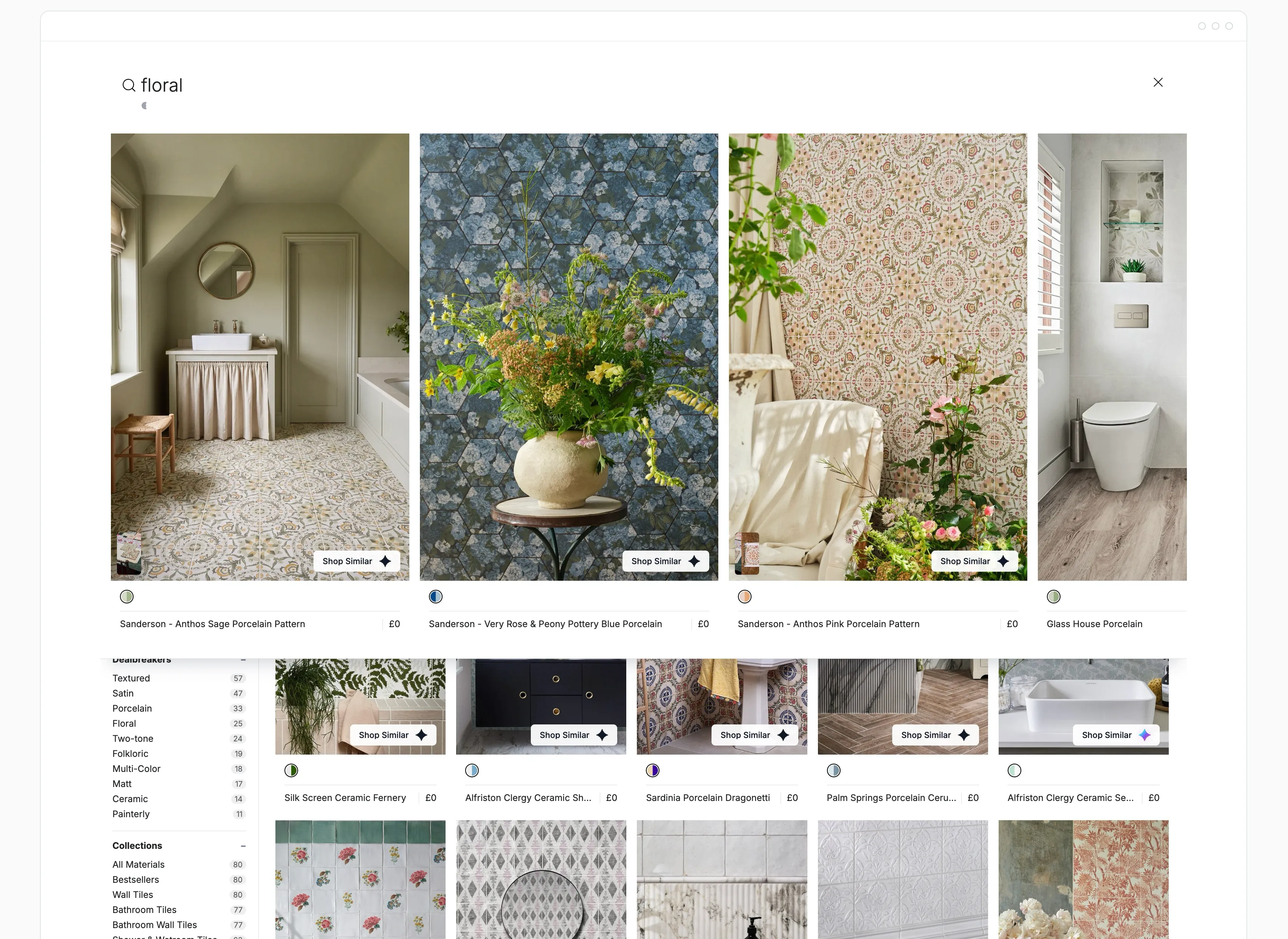
The Index search interface showing a natural language query and matching products

The discovery problem

Use difficult product decisions to frame the comparison.

A discovery-platform evaluation can become too broad to produce a clear decision. For a Shopify brand considering Constructor and RecoMelon, begin with the products and shopper language that the current journey handles least effectively.

Choose whether the problem is search interpretation, visual alternatives or complementary selection. Keep the acceptance criteria specific enough to assess on a representative category.

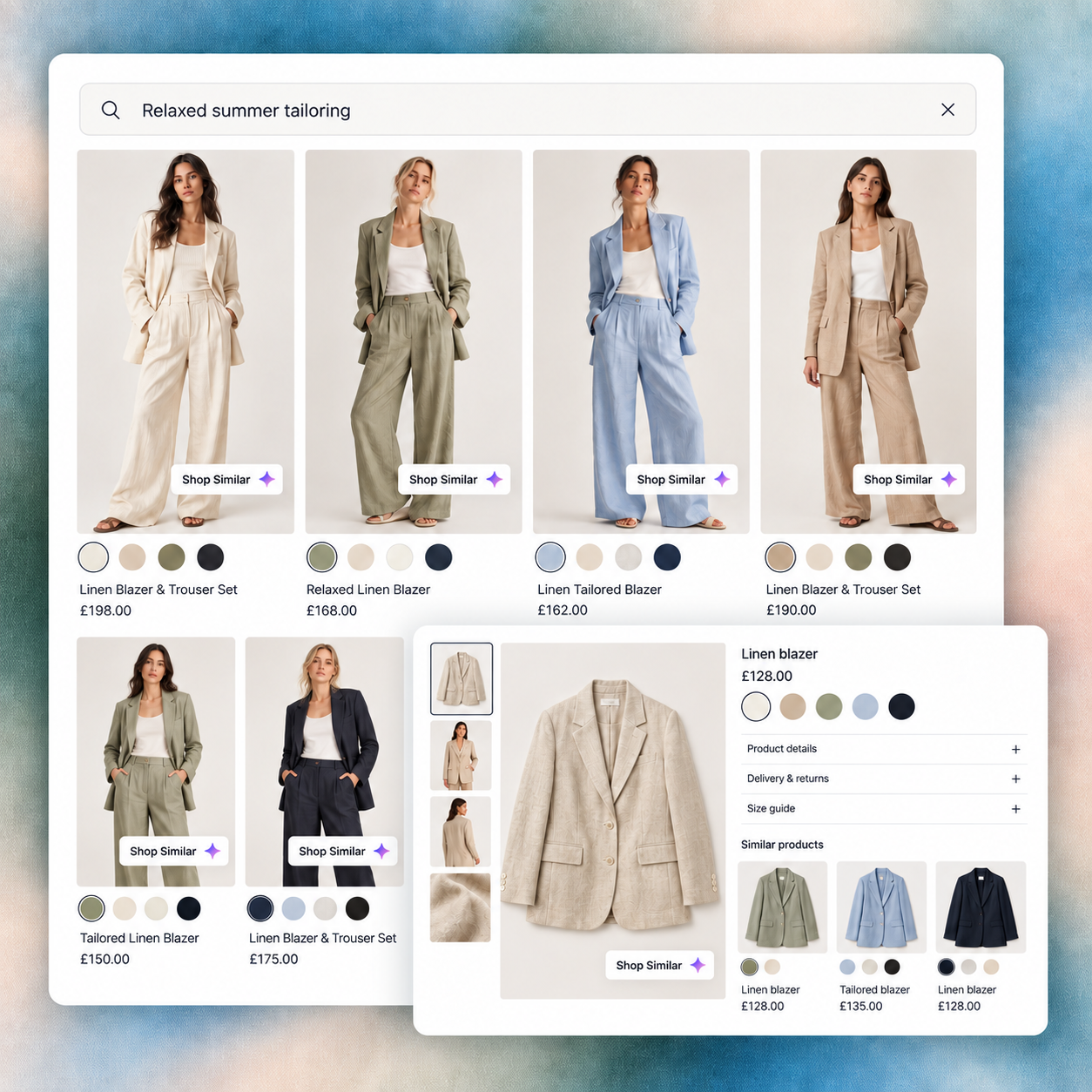
RecoMelon summer tailoring search results alongside a linen blazer product panel with visually related jacket alternatives.

Fit and implementation

Put visual product intelligence into a defined journey.

  • Fit and implementation


    The discovery task

    VisualDNA™ and IntentWeave™ support relationships and attributes drawn from product imagery and catalogue context. Evaluate those signals through The Index™, Reveal™ or Bundles™ according to the selected shopper task.

    RecoMelon summer tailoring search results alongside a linen blazer product panel with visually related jacket alternatives.

  • Fit and implementation


    The implementation boundary

    Agree which platform owns the test surface, its catalogue inputs and analytics.

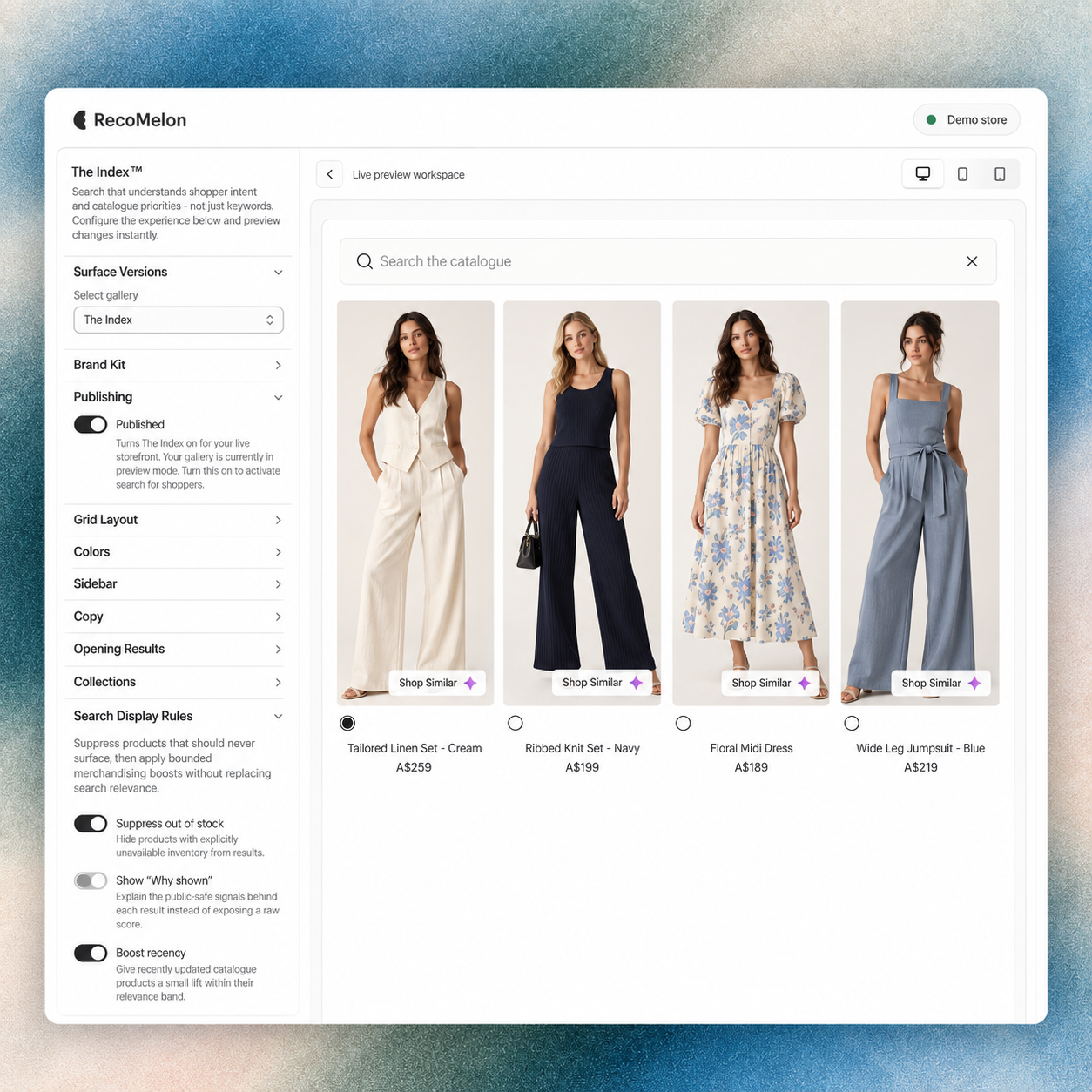
    RecoMelon The Index designer with merchandising controls and a varied fashion assortment preview.

  • Fit and implementation


    The conditions to validate

    Retain the current experience elsewhere and confirm market eligibility and fallback presentation. No native Constructor connector or feature parity is assumed.

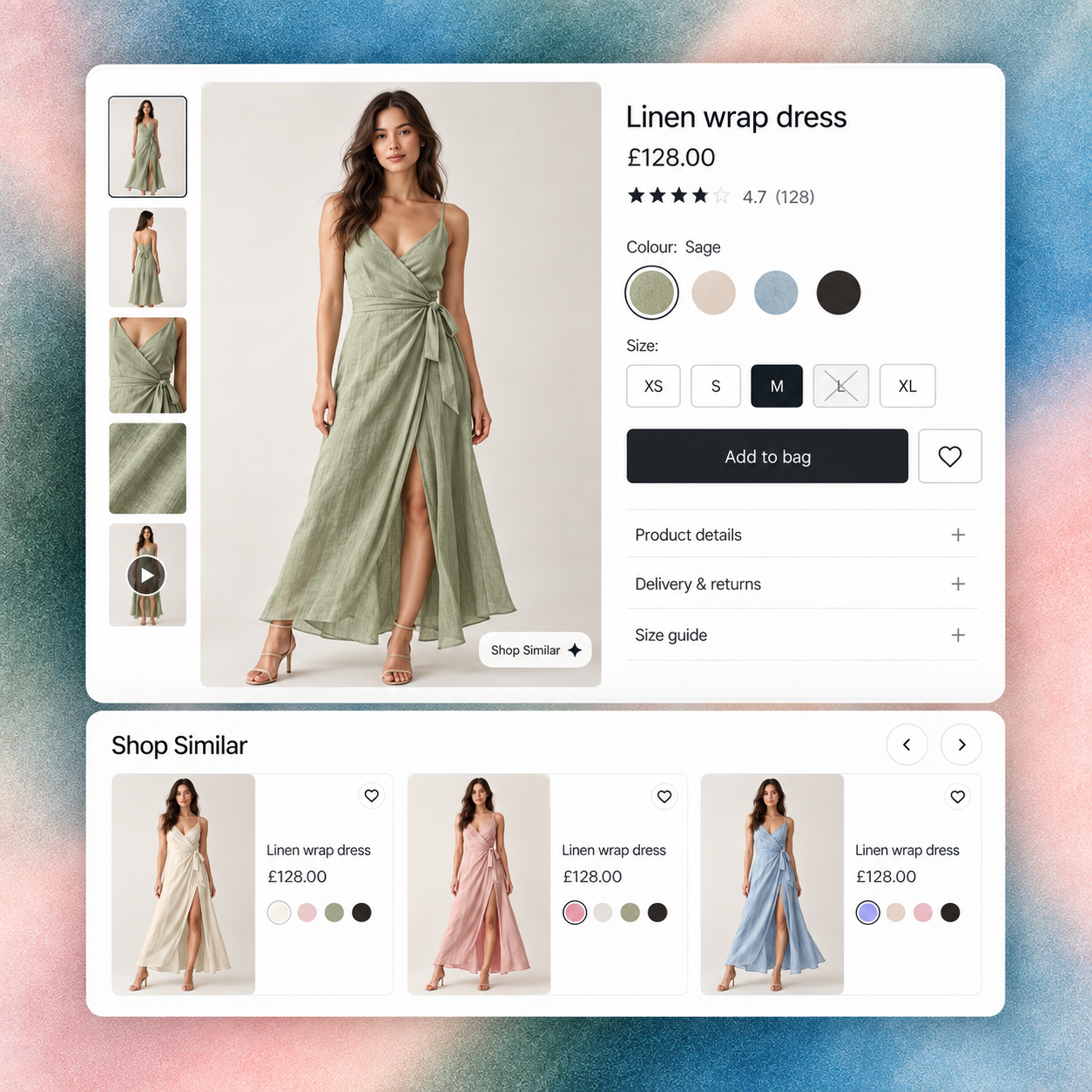
    Fashion product page for a sage wrap dress with colour and size choices, an unavailable size and RecoMelon Shop Similar alternatives.

  • Fit and implementation


    Evaluate complementary choices separately

    Review a complete-look placement alongside product alternatives, with clear ownership of the recommendations shown.

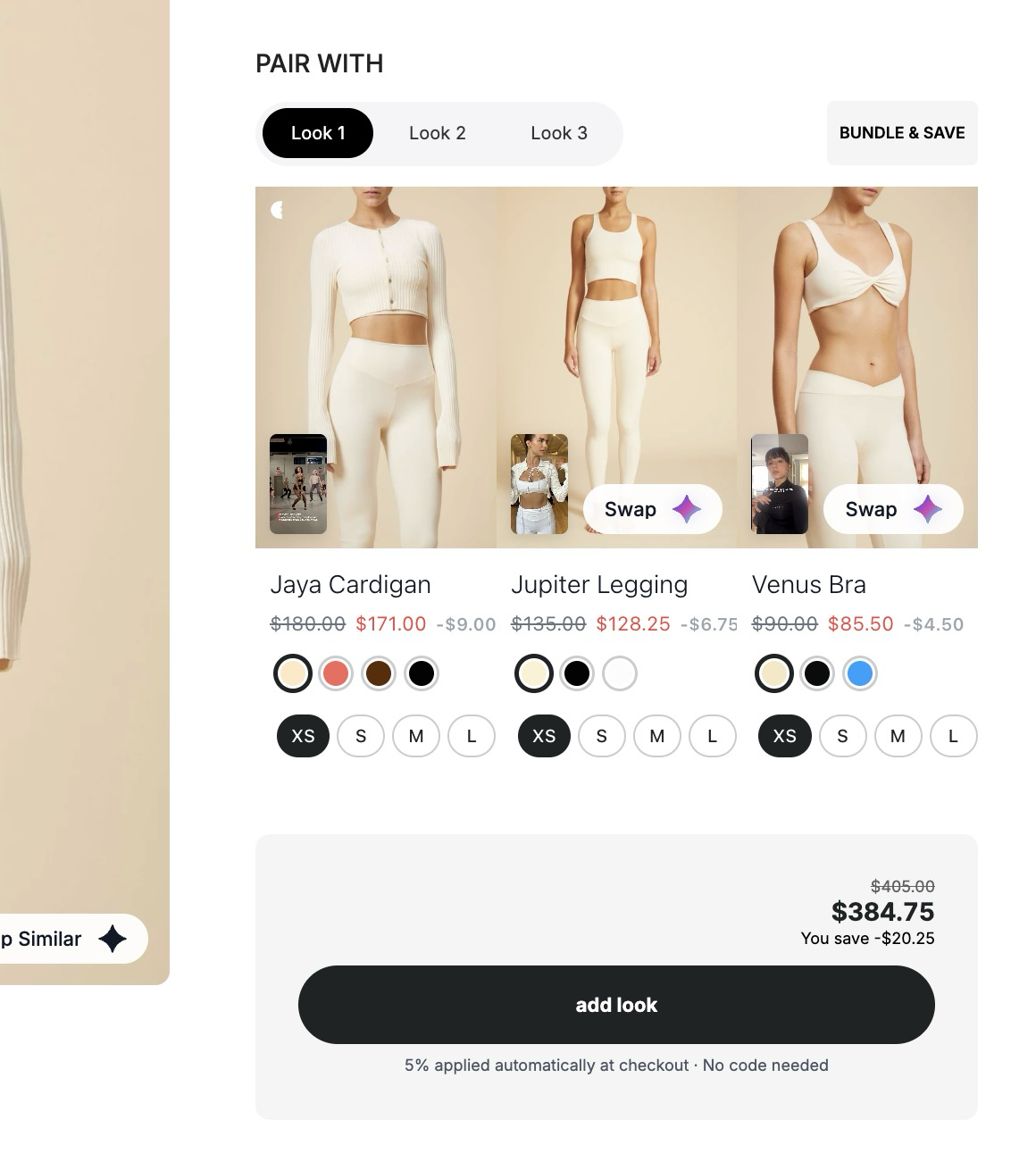
    RecoMelon Bundles showing a dress, straw bag and sandals with Look tabs, product swap controls, size choices and Add Look button.

  • Fit and implementation


    Review the mobile journey

    Check whether product details and visually related alternatives remain easy to explore on a narrow screen.

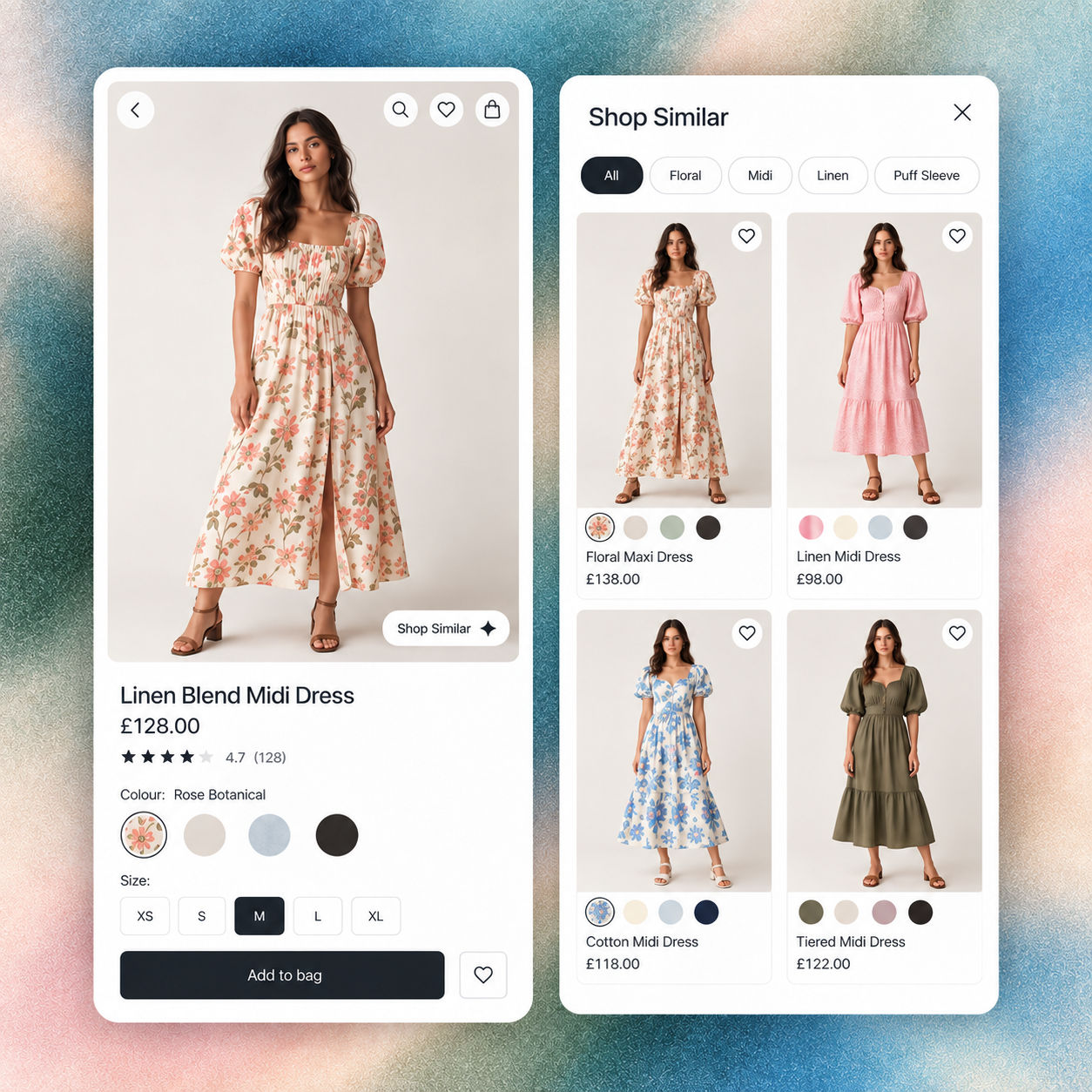
    Mobile fashion product page beside an open RecoMelon Shop Similar panel with related dresses and colour choices.

Evaluation and evidence

Let catalogue evidence guide the buying decision.

Review the relevance of results using representative shopper tasks, including difficult visual distinctions and low-history products. Measure search success or recommendation engagement according to the chosen surface, alongside progression to purchase.

Include the work required to configure, inspect and maintain the experience. Use consistent attribution and a control where possible, and keep conclusions limited to the implementation and audience actually tested.

What should brands compare between RecoMelon and Constructor?

Compare the platforms when search, recommendations and merchandising need to work across a large or visually complex catalogue.

Bloomreach presents a broad discovery platform. RecoMelon concentrates on making product imagery and catalogue context operational inside Shopify journeys.

What makes RecoMelon different?

RecoMelon builds visual relationships between products and uses them across The Index™ search, Smart Collections, Reveal™ PDP discovery and Bundles™. This can be particularly useful where style, colour, silhouette, pattern or finish affect relevance.

Must Bloomreach be removed first?

No. Scope which platform owns each surface and run a controlled test. RecoMelon can begin with PDP alternatives, a selected collection or complementary-product discovery while the current search stack remains live. No native Bloomreach connector is assumed.

What should procurement evaluate?

Review catalogue preparation, integration ownership, merchandising workload, time to value, regional requirements, explainability, reporting and the commercial result on a representative category.

Compare the relevance model, discovery surfaces, merchandising workload and implementation path using your own catalogue. Generic feature lists will not reveal how either system handles your hardest products and shopper language.

What is RecoMelon’s distinctive approach?

VisualDNA™ and IntentWeave™ interpret product imagery and catalogue context to form relationships around attributes such as style, colour, silhouette and pattern. Those relationships can support The Index™, Smart Collections, Reveal™ and Bundles™.

Can RecoMelon be tested without a full migration?

Yes. Begin with a category, PDP cohort or discovery surface while the current platform remains in place. Agree ownership, avoid overlapping experiences and measure the selected journey against a baseline. A native Constructor connector is not assumed.

What evidence should decide the outcome?

Evaluate relevant product exposure, recommendation engagement, search success, catalogue coverage, conversion and average order value, alongside operational effort and implementation risk.

Run the comparison where relevance matters most

Bring a category with difficult visual relationships, sparse behavioural history or excessive manual merchandising. We’ll design a focused evaluation.

Compare on your catalogue